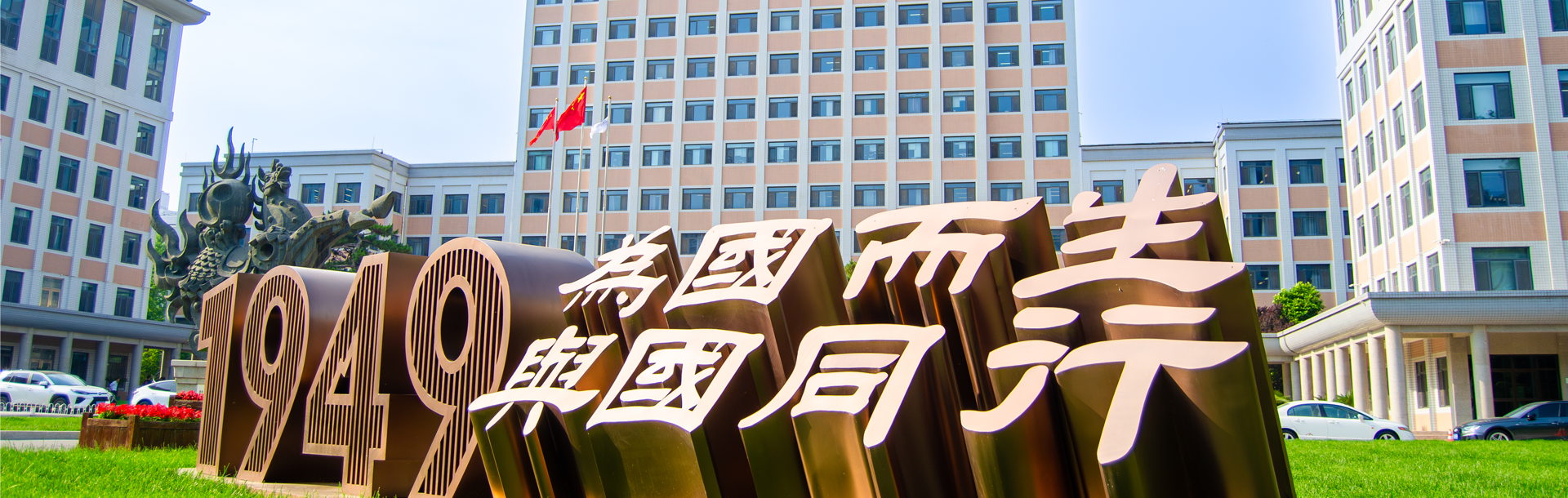
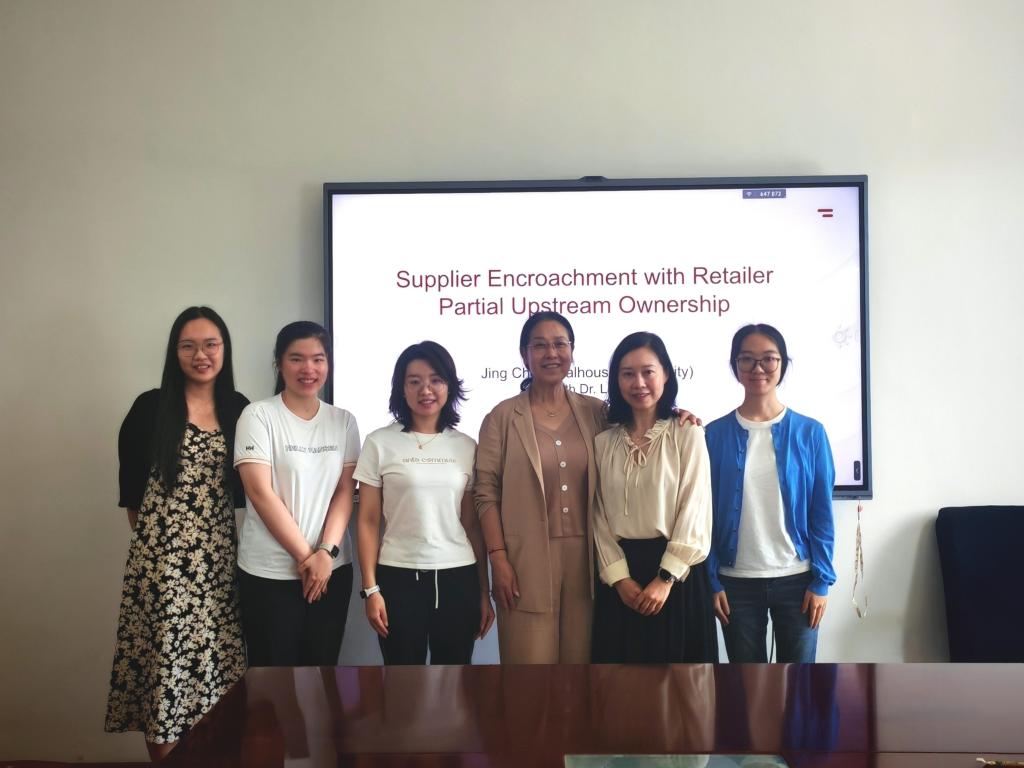
At 10 a.m. on Monday, June 22, 2026, CUFE Business School successfully hosted the 14th Distinguished Academic Forum of 2026 in Conference Room 615, Main Teaching Building, Xueyuan South Road Campus. Professor Chen Jing from Dalhousie University, Canada, was invited to deliver the lecture. More than ten faculty members, doctoral students and master's students from the Business School attended the event.
The forum was presided over by Professor Yan Nina of the Business School, who introduced Professor Chen Jing's academic background to the attendees before the event began. Professor Chen Jing is a professor in the Department of Management Science and Information Systems, Faculty of Management, Dalhousie University, and holds the William A. Black Chair in Commerce. She received her PhD in Management Science from the Richard Ivey School of Business, University of Western Ontario. Her research mainly focuses on competitive channel and supply chain management, the interface between operations management and marketing, and customer returns. She has published over 10 papers in internationally renowned journals including Production and Operations Management, Journal of Retailing, European Journal of Operational Research, Decision Sciences, Omega, Naval Research Logistics, IISE Transactions and Transportation Research Part E. She currently serves as an Associate Editor for journals including Omega, Journal of the Operational Research Society, IEEE Transactions on Engineering Management and International Transactions in Operational Research, and has published more than 30 teaching cases for the Ivey Business School.
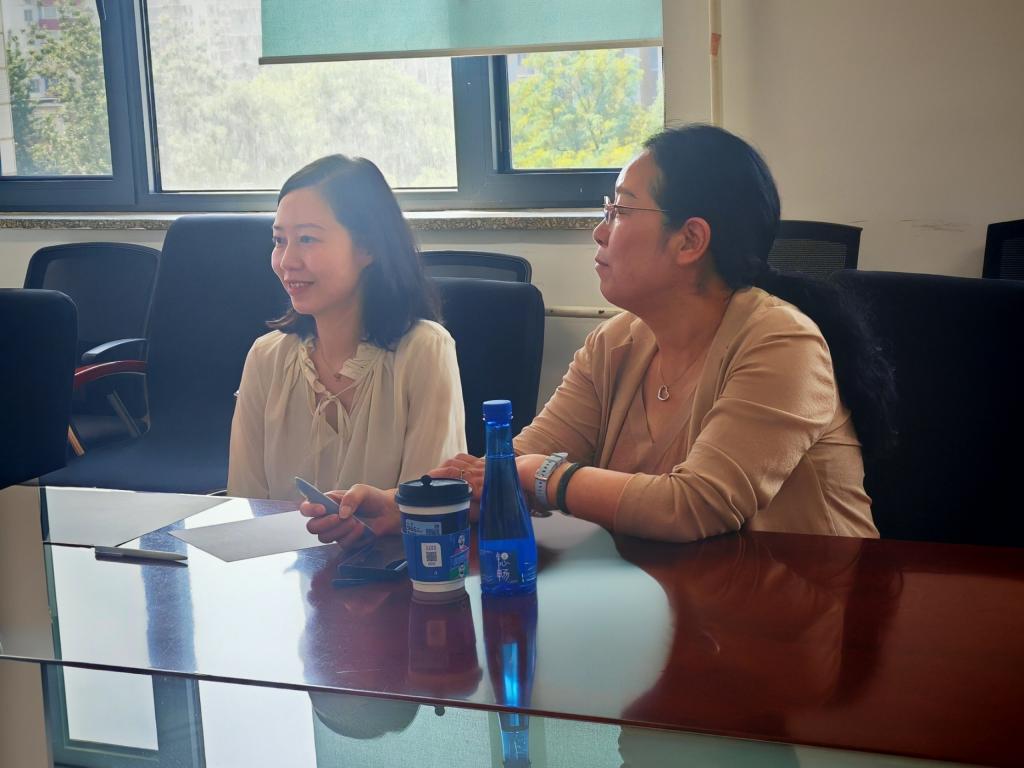
The title of Professor Chen Jing's lecture was Supplier Encroachment under Partial Upstream Equity Ownership by Retailers. She extends the existing literature by examining how supplier encroachment strategies change when a retailer holds a non-controlling equity stake in the supplier, that is, when the retailer shares upstream profits but holds no control rights. The study finds that, on the one hand, this ownership structure dilutes the revenue the supplier retains through direct sales; on the other hand, it induces the retailer to order more aggressively because it partially internalizes upstream profits, thereby expanding total output, lowering the market-clearing price, compressing direct channel profits and weakening the coordination value of encroachment. The results show that partial equity ownership narrows the region in which the supplier willingly sells direct, and may even make encroachment entirely unprofitable for the supplier; meanwhile, the retailer may still benefit from encroachment even when facing negative retail profits, because its equity participation allows it to share upstream profits. The study challenges the conventional view of supplier encroachment and demonstrates that ownership-linked governance mechanisms can significantly reshape channel competition. Professor Chen further verifies the robustness of the findings under imperfect channel substitution and alternative decision timing, offering new theoretical insights into supply chain governance.
After the lecture, teachers and students present had an in-depth discussion with Professor Chen Jing on topics such as supplier encroachment strategies, the governance role of retailer upstream equity, coordination mechanisms in dual-channel supply chains and channel management practices in the Chinese context. The event facilitated the exchange and interplay of academic ideas.
As a key platform for CUFE Business School to fulfill its mission of advancing new management knowledge, the Distinguished Academic Forum centers on frontier issues in business administration and the management practices of Chinese enterprises. It pools global wisdom and innovative insights, and strives to provide theoretical support and practical solutions for the sustainable social and economic development of China.