To advance the high-quality development of China’s business disciplines and deepen the integration between the technology industry and business education, the Business School of Central University of Finance and Economics (CUFE) hosted the Frontier Forum on "Technology + Business" — the Seminar on Business Discipline Development for Integrated Technology and Commerce on the afternoon of May 31, 2026.
 The first session of the seminar, the Forum on National First-Class Undergraduate Program Development, was presided over by Professor Gu Leilei, Vice Dean of CUFE Business School. Experts and scholars from numerous universities nationwide shared their explorations and practical experience regarding business administration program development, digital and intelligent transformation, industry-education integration, and other key topics.
Professor Wang Yanyu, Director of the Department of Business Administration, School of Economics and Management, Beijing University of Posts and Telecommunications, first presented the development of the university’s business administration program, covering its developmental achievements, future construction plans and talent training schemes.
Professor Zhang Jianyu, Dean of the Business School, Tianjin University of Finance and Economics, delivered a speech titled The Retreat and Restructuring of Business Education in the AI Era. Drawing on 20 years of practical reflections at his university, he conducted an in-depth analysis of the dilemmas facing business education. He emphasized that the core of a technology-business school lies neither in technology nor pure business, but in translation and transformation. Its mission is to cultivate interdisciplinary talents capable of driving such transformation.
Professor Liu Tiansen, Vice Dean of the School of Economics and Management, Harbin Engineering University, spoke under the theme of "Mission Guidance & Party Building Empowerment". He elaborated on the school’s disciplinary development measures and outcomes in improving academic conduct, innovating training models and advancing digital intelligence, as well as its development targets for the 15th Five-Year Plan period.
Professor Zhang Han, Vice Dean of the School of Business Administration, Capital University of Economics and Business, shared experience in building interdisciplinary teaching teams and implementing industry-education integration models, with a detailed introduction to the distinctive "Four-Dimensional Business Administration" talent training system, pathways for interdisciplinary team development, and cross-integration practices of micro-majors.
Professor Li Haiping, Dean of the School of Economics and Management, Beijing Institute of Petrochemical Technology, delivered a presentation themed "Empowerment through Integration, Talent Cultivation via Practical Education", introducing the university overview and the talent training model adopted by its School of Economics and Management.
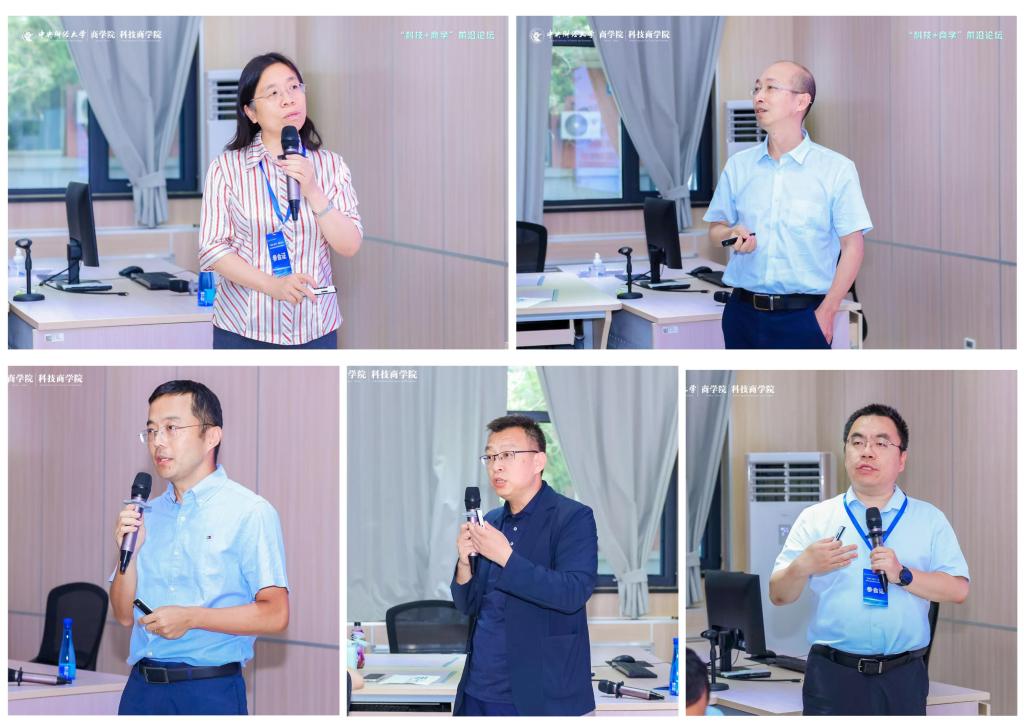 Professor Li Guirong, Dean of the School of Business Administration, Hebei University of Economics and Business, shared the program transformation practice centered on "Digital & Intelligent Empowerment, Industry-Education Integration and Cross-Border Collaboration". Based on three driving forces including policy orientation, industrial demands and school positioning, she outlined the school’s future development blueprint: continuously optimizing core majors, rolling out new micro-majors with high standards, advancing the development of industrial colleges, and summarizing, refining and replicating successful experience.
Professor Zhang Xiang, Vice Dean of the School of Management, Beijing Institute of Technology, focused on "AI Empowerment for Economics and Management Discipline Development". Addressing existing challenges head-on, he put forward a full set of solutions: strengthening top-level design, updating curriculum content, constructing professional knowledge graphs, benchmarking world-class standards, boosting efficiency with smart technologies, elevating faculty and students’ AI literacy, and improving institutional safeguards for teaching teams. He also presented initial achievements in program development.
Professor Chen Ke, Director of the Marketing Department, University of International Business and Economics School of International Business, systematically illustrated innovations and practices in undergraduate marketing talent training featuring digital and intelligent transformation, covering talent training objectives, core challenges, implementation measures, outcomes, promotion strategies and future directions.
Professor Jin Chunhua, Dean of the Business School, Beijing Information Science and Technology University, shared explorations and practices in cultivating new digital-intelligent business talents. He highlighted experience in deepening integration between digital technologies and specialized disciplines, digitally upgrading traditional business majors, and building multi-dimensional digital-intelligent teaching resources underpinned by "Three Integrations and Three Coordinations".
Professor Zhang Jin, Vice Dean of Renmin University of China Business School, discussed reforms in cultivating students’ capabilities of data utilization and intelligent application in business administration programs. He pointed out that the AI era requires not only talents proficient in AI tools, but also those competent in human-AI collaboration. He stressed that business administration programs should nurture talents who can not only leverage data and intelligence, but also govern and manage data and intelligent systems.
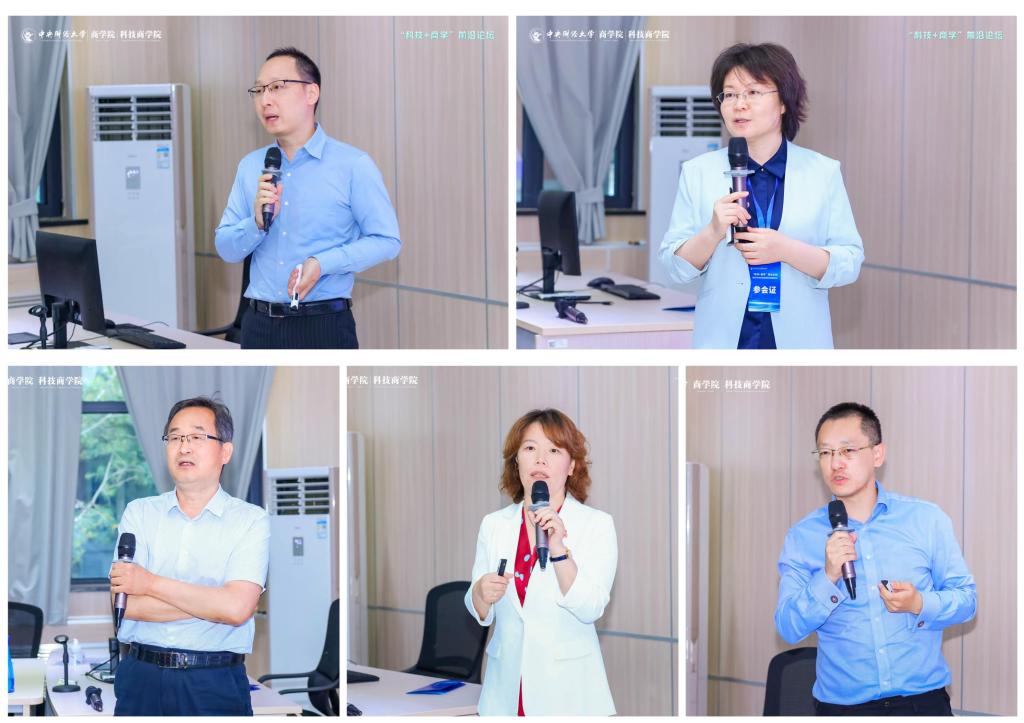 Professor Gu Fan, Director of the Department of Business Administration, China University of Political Science and Law Business School, shared program construction practices featuring "Integrating Law and Business, Cultivating Talents with Distinctive Characteristics", detailing the school’s efforts in fostering law-business integrated education, advancing digital-intelligent construction and scaling up internationalized schooling.
Professor He Yurun, Executive Dean of Beijing Technology and Business University Business School, presented the university’s practices in business education transformation, focusing on the digital transformation of business disciplines and the development of an interdisciplinary digital business platform.
Professor Hou Dianmu, Dean of the School of Management, China Women’s University, shared reforms and practices in the digital transformation of business administration majors against the backdrop of the digital economy.
Professor Liu Yingqi, School of Economics and Management, Beijing Jiaotong University, shared insights into developing the national first-class undergraduate program of "AI + Business Administration". She outlined the school’s initiatives including ideological and political guidance coupled with digital-intelligent empowerment, training scheme optimization, construction of platforms for interdisciplinary innovative talent cultivation, international exchanges, AI-enabled teaching and future classrooms, and proposed directions for advancing digital-intelligent business administration development, such as teaching model innovation and practical training system upgrading.
Professor Yao Xiao, Chair of the Strategic Management Department, CUFE Business School, delivered a report titled Business Discipline Development Driven by Technology-Business Integration. He introduced the school overview, talent training goals, competency cultivation frameworks, development roadmap and distinctive training features, stating that the school is committed to cultivating interdisciplinary talents equipped with combined expertise in management, technology and finance — individuals with solid business expertise, sharp insight into the technology industry, global vision, leadership potential and the ability to solve practical problems innovatively.
The second session, the Journal Roundtable Forum, was hosted by Professor Dou Chao, Director of the Doctoral Program, CUFE Business School. Guest panelists included Zhu Helou, Editorial Director of Journal of Economics and Management, Xu Fangchao, Academic Editor of Nankai Business Review, and He Yang, President of CUFE Academic Journals Press. Faculty and students engaged in lively exchanges with journal editors regarding paper topic selection, submission strategies and other related issues.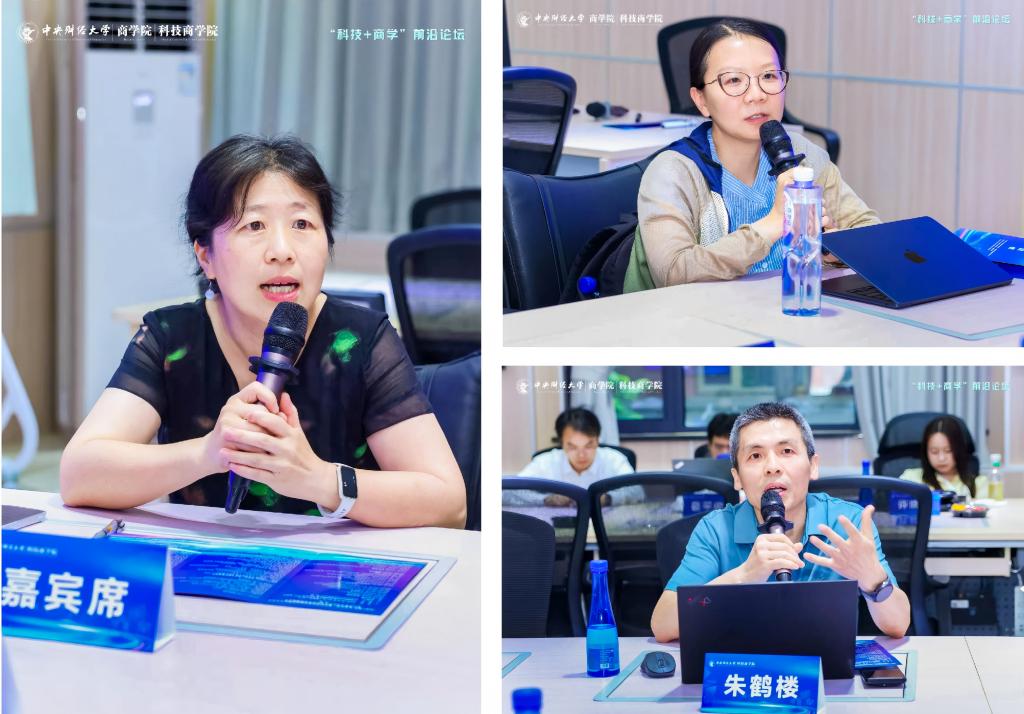
The forum comprehensively showcased innovative explorations and abundant practical outcomes of various universities in developing national first-class undergraduate business administration programs. It served as a valuable exchange platform for advancing the digital and intelligent transformation of business education, furthering industry-education integration, and establishing a China-specific talent cultivation system for business disciplines.