On the morning of May 15, 2026, the Business School of Central University of Finance and Economics (CUFE) and the Financial Program Center of China Media Group (CMG) jointly hosted the Business Ethics in Culture series event: A Visit to Time-Honored Brand Museums along the Central Axis. Centered on the theme Walking the Central Axis, Visiting Time-Honored Brands, Exploring Centuries-Old Business Wisdom, the activity organized faculty and students to visit the Yuanshenghao Museum, Liubiju Museum, Quanjude Museum, and the ancient "Financial Street" on Xiheyan Road. The event invited Gao Xiaolong, a research librarian at the Capital Museum and expert of the China Cultural Heritage Protection Foundation, and Liu Zixu, assistant professor in the Strategy Department of the Business School, to deliver on-site lectures. Guided by the experts, participants gained insights into the enduring cultural roots and essence of time-honored brands during the walk, creating a ideological and political practice lesson amidst traditional culture. Xu Xianmei, Director of Business School Committee, and over 20 faculty members and students attended the event.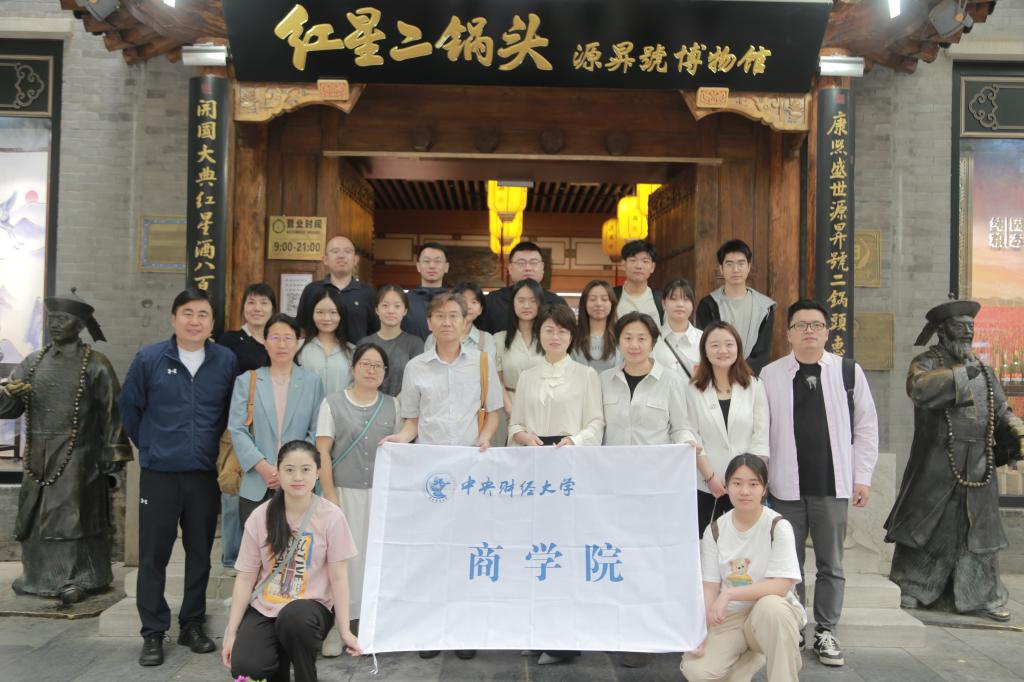
Understanding Time-Honored Brands on the Central Axis: Exploring Traditional Commercial Civilization in Historic Streets
Starting from Qianmen, the faculty and students walked along the southern section of Beijing’s Central Axis and sequentially visited three time-honored brand museums—Yuanshenghao, Liubiju, and Quanjude—that showcase both historical legends and contemporary innovation.
Unlike regular classroom teaching, this event invited cultural heritage experts and faculty members to serve as "walking narrators." Inside each museum and along the ancient streets connecting them, Teacher Gao provided in-depth interpretations of the core spirit of excellent traditional Chinese culture embodied by these brands, covering historical context, cultural heritage preservation, business ethics, and brand inheritance. Following the cultural footprint of Beijing’s Central Axis, the group walked, observed, learned, and reflected, deeply appreciating how time-honored brands uphold cultural roots, integrate modern spirit, and continuously achieve the creative transformation and innovative development of traditional culture amid evolving times.
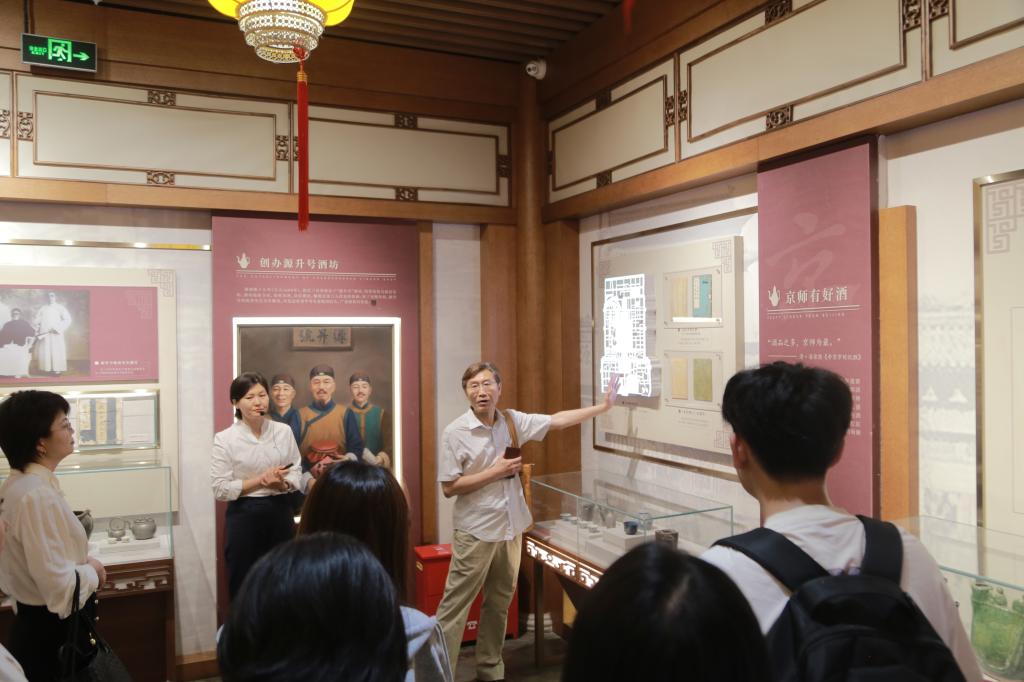 At the Yuanshenghao Museum, participants learned about the origin and inheritance of Erguotou liquor-making techniques. As the birthplace of Beijing Erguotou liquor, Yuanshenghao is not only a living testament to traditional brewing craftsmanship but also embodies the business philosophy of "integrity as the foundation, craftsmanship as the soul". Combining physical exhibits, Teacher Gao shared the operational wisdom of time-honored brands in upholding quality and adapting to social changes over centuries.
Next, the group visited the Liubiju Museum. Founded during the Zhengtong reign of the Ming Dynasty, Liubiju is renowned at home and abroad for its pickles. The museum’s restored old workshops, account books, and plaques vividly illustrate how this "China Time-Honored Brand" adheres to its six ancestral precepts—"grain must be pure, yeast must be solid, soaking must be clean, pottery must be fine, heat must be precise, water must be fragrant"—throughout material selection, brewing, and sales. Teacher Gao guided participants to reflect on the modern management value of "balancing righteousness and profit" and "prospering business through virtue" in traditional business ethics.
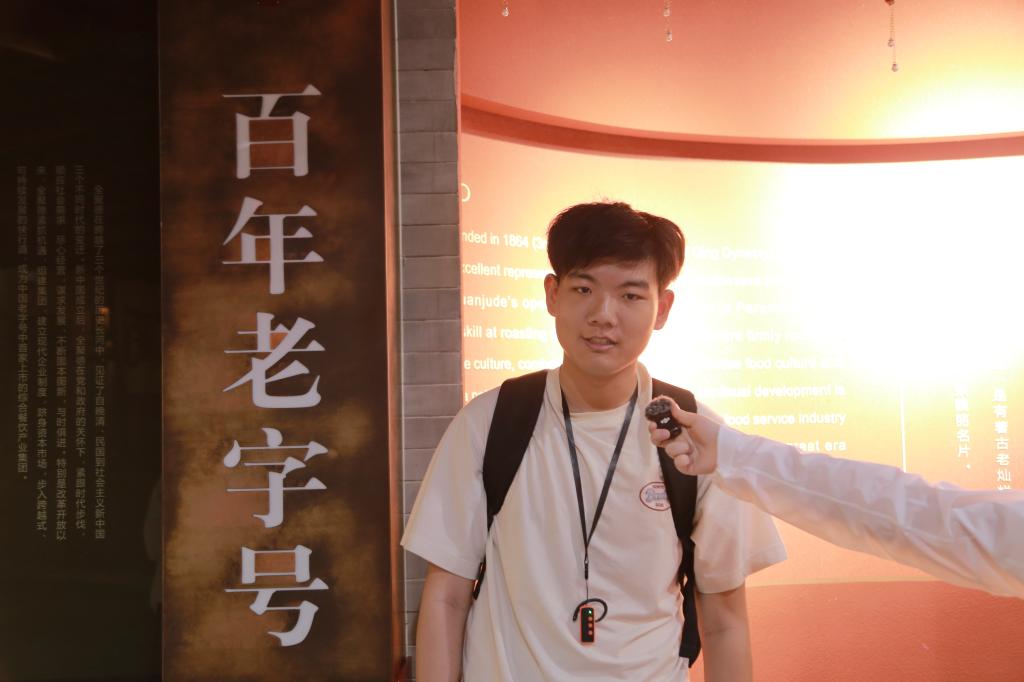
 At the Quanjude Museum, precious exhibits—including the evolution of Peking duck roasting techniques, vintage menus, and inscriptions by notable figures—allowed participants to experience how this century-old restaurant deeply integrates culinary culture with brand management. From a small hanging oven shop to a globally renowned catering brand, Quanjude’s growth serves as a vivid example of the business philosophies of "upholding tradition while innovating" and "operating with integrity for all". At the end of the tour, Teacher Gao invited Director Li Dong from Quanjude Group to explain the brand’s future development strategy and business layout.
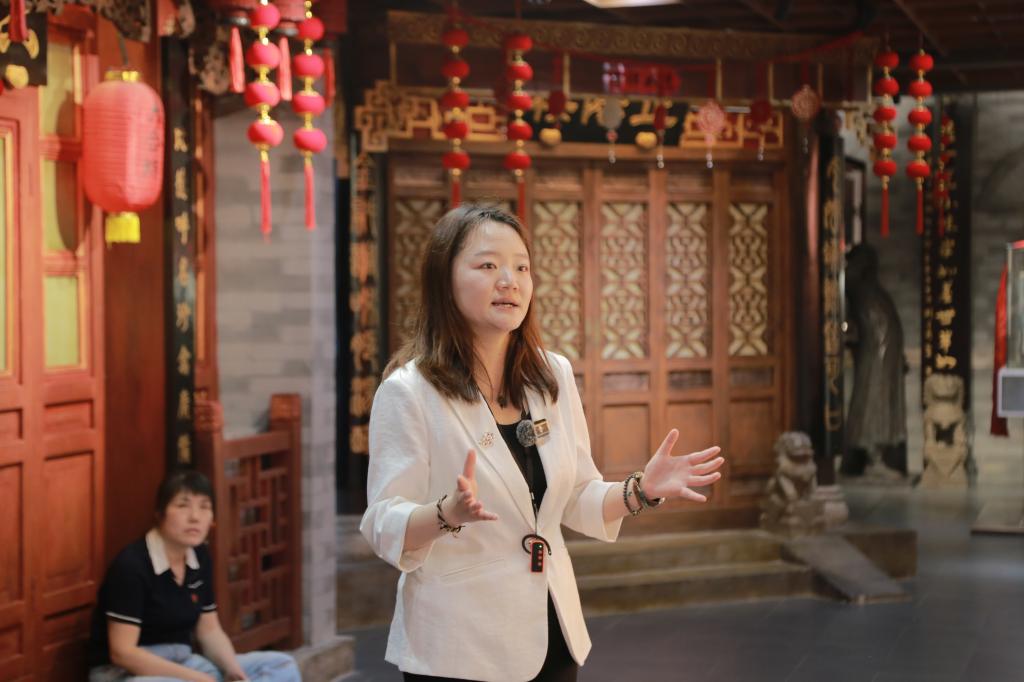
 Concluding the visit, the group gathered at the Quanjude Museum. Professor Liu Zixu from the Strategy Department offered in-depth insights from management, marketing, and business ethics perspectives, explaining the core centuries-old business wisdom of time-honored brands: upholding original aspirations, operating with integrity, pursuing excellence, and innovating while respecting tradition. She guided students to systematically analyze the underlying logic and mechanisms that enable these brands to endure historical changes and maintain long-term stable operations. Professor Liu emphasized that time-honored brands are not merely commercial entities but vital cultural carriers that preserve excellent traditional Chinese culture, urban heritage, and national spirit. She noted: Yuanshenghao embodies the intergenerational inheritance of brand trust built on centuries of reputation; Liubiju preserves the early practice of standardized governance and refined management in traditional commerce; Quanjude vividly demonstrates the practical path of exploring traditional cultural IP, reshaping its value, and sustaining its vitality—providing a model for the creative transformation and innovative development of traditional culture today.
Following the lectures, students engaged in lively discussions and shared reflections. One participant remarked, "Learning on the go and seeing with our own eyes makes textbook theories truly come alive." Students also highlighted their most memorable exhibits: the origin of the name "Erguotou," the earliest joint-stock contract, Liubiju’s sweet water ancient well, and clay figurines depicting Quanjude’s duck-roasting process.
 The event concluded successfully at noon. Faculty and students expressed that the half-day "walking classroom" was deeply inspiring. The enlightenment of "reading ten thousand books and traveling ten thousand miles" has quietly taken root among the blue bricks, gray tiles, and century-old plaques.
Conclusion
Guided by Xi Jinping Thought on Culture, this event organically integrates excellent traditional Chinese culture, the preservation of the Beijing Central Axis cultural heritage, the business spirit of time-honored brands, with university ideological and political education and business talent training. By moving classrooms to cultural sites and integrating ideological and political learning into on-site research, the Business School has made an innovative effort to implement the "comprehensive ideological and political course" initiative and deepen the integration of business education with cultural nurturing.
Moving forward, the Business School will continue to leverage its flagship Business Ethics in Culture event, delve into the educational resources of excellent traditional Chinese culture, and explore new models of integrating traditional culture with business education. Upholding the principle of nurturing people through culture, the school aims to guide young students to consciously inherit Chinese cultural heritage, draw wisdom and craftsmanship from time-honored brands, and uphold integrity, innovation, and original aspirations in their business studies and future careers. The goal is to cultivate new-era interdisciplinary financial talents with cultural depth, business acumen, and a sense of national responsibility.