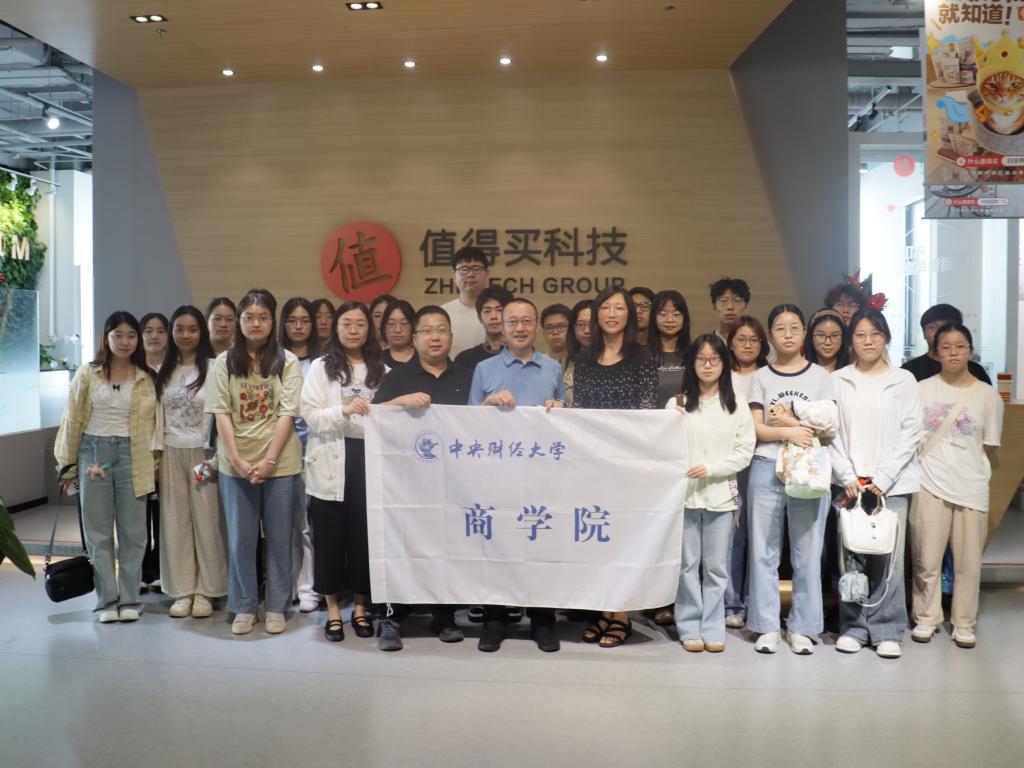
On July 3, 2026, during the 2026 Summer Labor Practice Week of the CUFE Business School, faculty members and students from the CUFE Business School, School of Technology and Business visited Beijing Zhidemai Technology Co., Ltd. (hereinafter referred to as “Zhidemai Technology”) for a study visit and exchange. The visit was led by Professor Gao Yongling, Director of the Industry-Education Integration Program of the CUFE Business School, School of Technology and Business, Professor Mou Shandong, Chair of the Department of Supply Chain and Operations Management, and Professor Wang Huiting, Secretary of the Youth League Committee of the CUFE Business School, School of Technology and Business. More than 20 students were organized to visit a leading enterprise in digital consumption, where they gained first-hand insights into the company's development model, business layout and the frontier trends of the interest-driven consumption industry.
I. Touring the Corporate Exhibition Hall: Experiencing Corporate Culture and People-Centered Development
At 2 p.m., the faculty members and students arrived at the headquarters of Zhidemai Technology in Fengtai District. Guided by Liang Zhuxuan from the CEO Office of Zhidemai Technology, they toured the company's exhibition hall, gaining an immersive understanding of its development history, core values and talent support system. In addition, the guide gave a detailed introduction to the modern office environment and the comprehensive employee care mechanisms. The company has established a growth and learning center and implemented an AI-based credit training system, empowering employee development through the integration of internal and external courses. These all-round supporting facilities and learning mechanisms allowed the faculty members and students to directly experience the humanistic warmth and talent development philosophy of a technology enterprise.
II. Listening to Business Briefings: Systematically Grasping the Group's Development Layout
Xu Diye, Head of the Marketing Department of Zhidemai Technology, gave a comprehensive briefing on the Group's development history and business system, detailing its core businesses, business model and service systems for brands, consumers and the AI ecosystem, enabling the faculty members and students to develop a comprehensive and systematic understanding of the Group's overall business framework and long-term development strategy. Zhidemai Technology has now formed three core business segments—consumer content, intelligent marketing and consumer data—and has built a complete digital consumption ecosystem. It has also implemented a comprehensive AI strategy and improved its AI layout, providing solid support for the implementation of AI technologies and industry research.
III. Focusing on the Interest-Driven Consumption Sector: Discussing Frontier Industry Trends
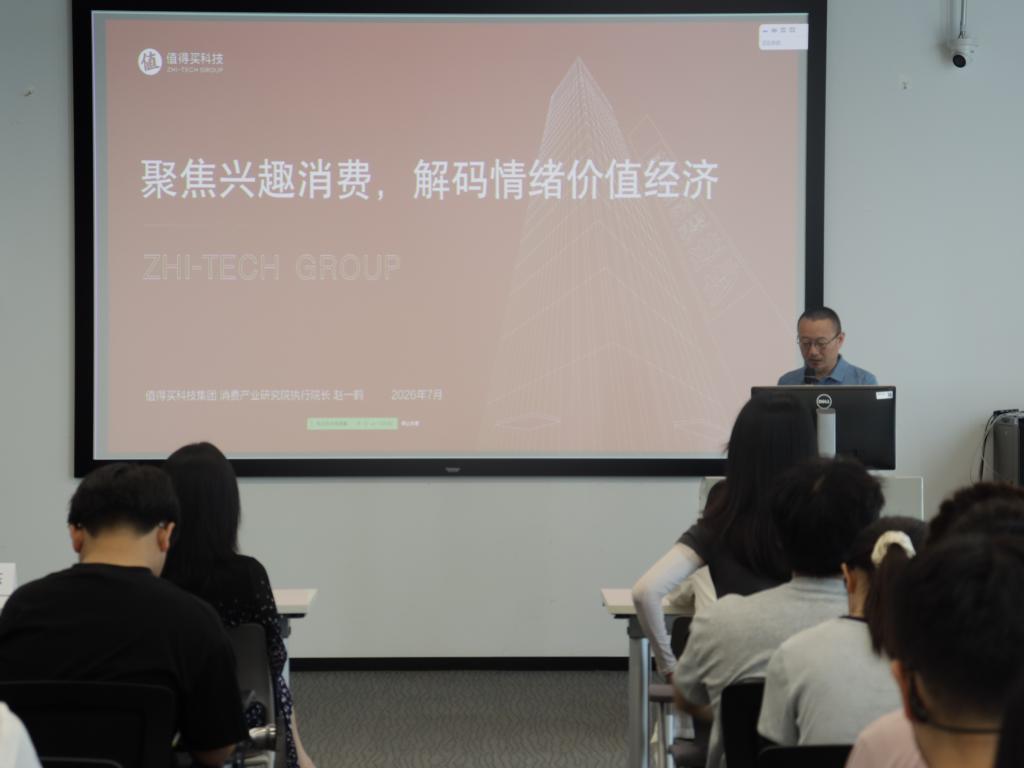
Zhao Yihe, Executive Director of the Zhidemai Consumer Industry Research Institute, delivered an in-depth presentation based on current changes in the consumer market, covering the development status of the interest-driven consumption sector, the characteristics of user groups, the development of the content ecosystem, and industry opportunities and challenges, introducing the faculty members and students to a new business logic of digital consumption. He noted that the consumer market has shifted from functional satisfaction to emotional value-driven consumption, with the market size of the emotional economy continuing to expand and penetration in lower-tier markets rising steadily. Zhidemai Technology has upgraded its formula for the perceived value-for-money of interest-driven consumption, proposed a four-dimensional self-driving model, refined four major consumption scenarios and five core consumer groups, and leveraged AI-based emotion tagging technology to precisely assess emerging consumption sectors.
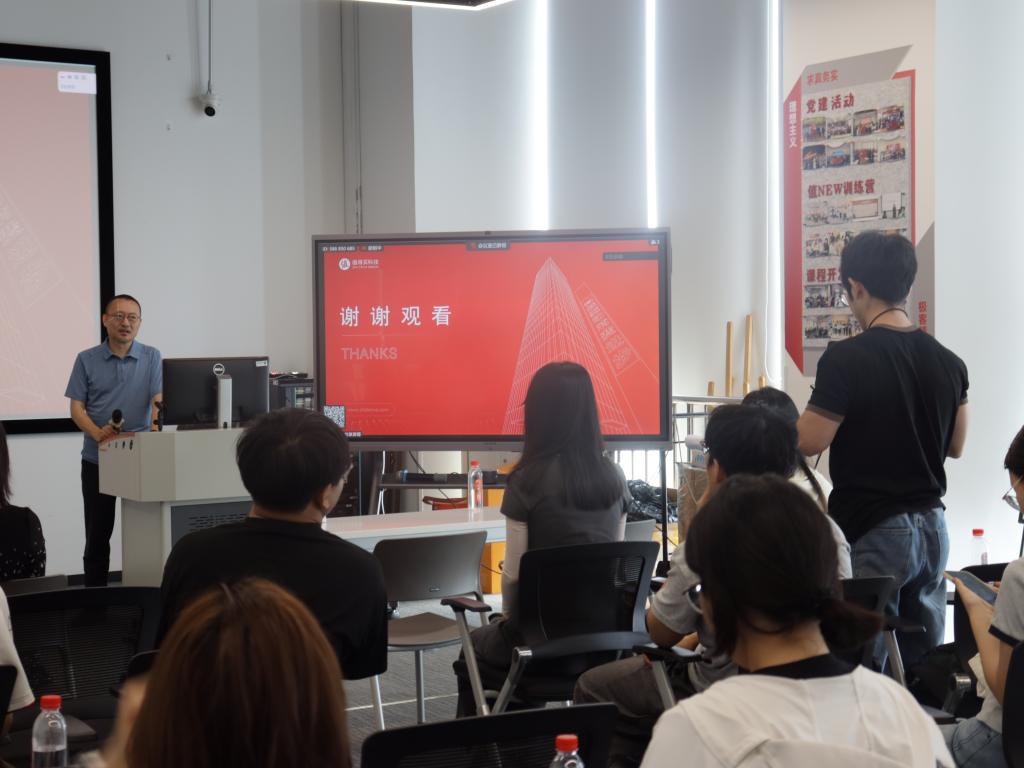
During the interactive session, the faculty members and students actively discussed topics such as the development of the digital consumption industry, AI applications in business, and interest-driven consumption based on what they had learned during the visit. Executive Director Zhao Yihe responded in detail to each question by drawing on corporate practices and industry research findings. The discussion was lively, and the students broadened their industry horizons and deepened their understanding of the relevant knowledge through the interactive Q&A.
This Summer Labor Practice Week visit enabled the faculty members and students to step out of the classroom and engage directly with industry frontiers, gaining in-depth knowledge of the operating model, AI layout and new business formats of interest-driven consumption at a leading enterprise. It effectively bridged the gap between professional theory and industry practice and enriched the educational content of labor practice. Looking ahead, the CUFE Business School, School of Technology and Business will continue to deepen industry-education integration, carry out corporate study visits on a regular basis, and cultivate interdisciplinary business talent suited to the development of the digital economy.