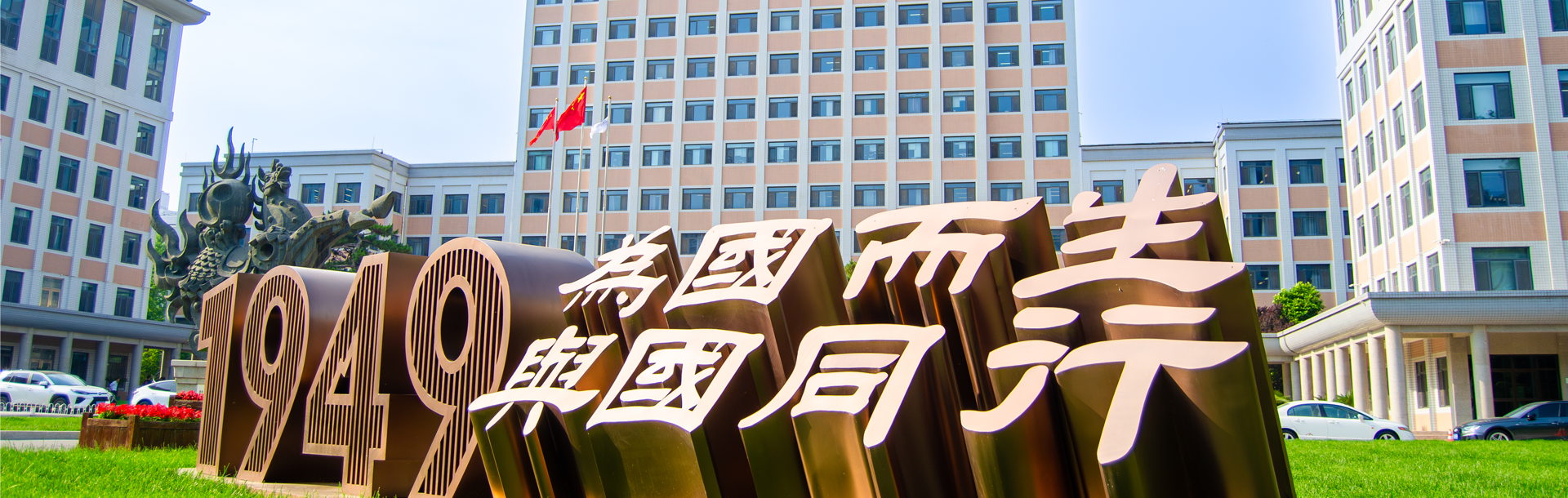
From July 5 to July 18, 2026, “Entrepreneurship in Digital Era: 2026 CUFE International Summer School,” hosted by the CUFE Business School, was held on the Xueyuan South Road Campus. Focusing on the entrepreneurial spirit in the digital era and recruiting students globally, the program brought together international students from diverse cultural backgrounds, including the United States, Greece, Germany, Spain, Cyprus and Tanzania. Through on-site study and industry exchanges, Chinese and international students gained a comprehensive understanding of the trajectory of China’s business development and the interplay between Chinese business practice and the wave of globalization. At the same time, with joint talent cultivation as a key lever, the program continued to strengthen the international collaborative network in business education.
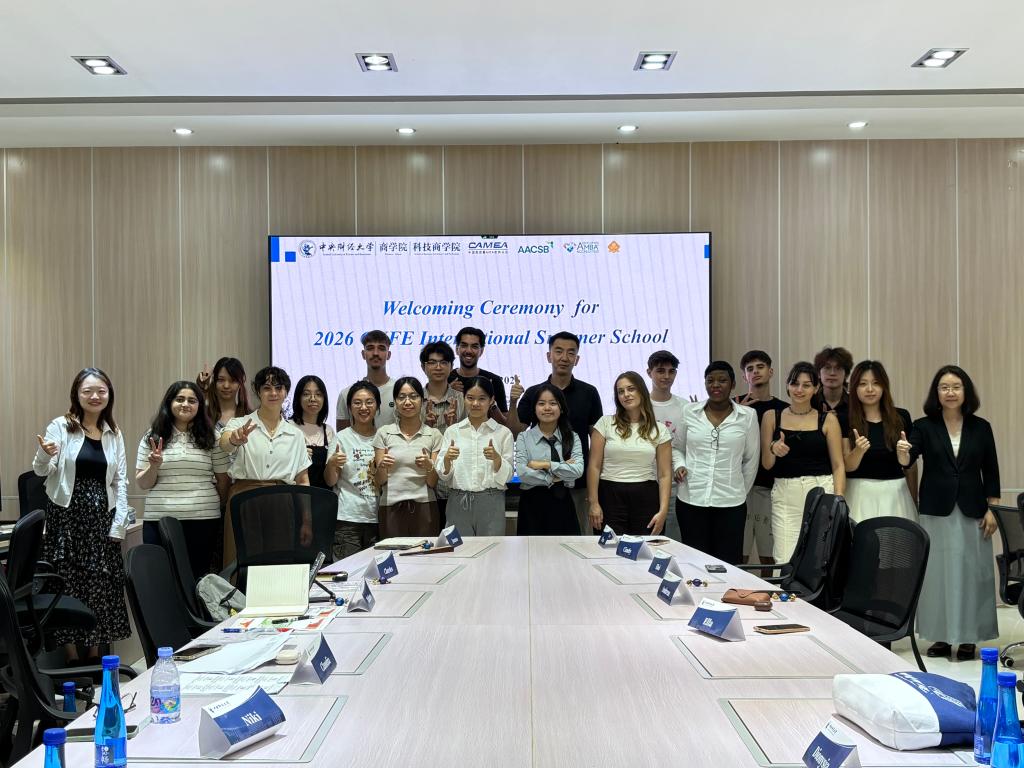
On July 6, Professor Xiaoming Yang from the University of Nebraska, and Professor Ge Jianxin, Professor Lin Song and Professor Liu Zixu from the CUFE Business School attended the opening ceremony. Chinese and international students gathered together and experienced the warm welcome extended by Central University of Finance and Economics.
This year’s International Summer School invited Professor Attila Mucsi from Corvinus University of Budapest, Hungary, Professor Xiaoming Yang from the University of Nebraska, the United States, and Professor Andranik Tumasjan from Johannes Gutenberg-Universität Mainz, Germany, to offer courses including Strategic Entrepreneurship and Entrepreneurial Marketing. Closely aligned with the practical needs of digital entrepreneurship, the courses guided Chinese and international students to jointly explore the core concepts and operating models of digital entrepreneurship through diverse teaching methods such as case analysis, group discussions, corporate visits and field research.
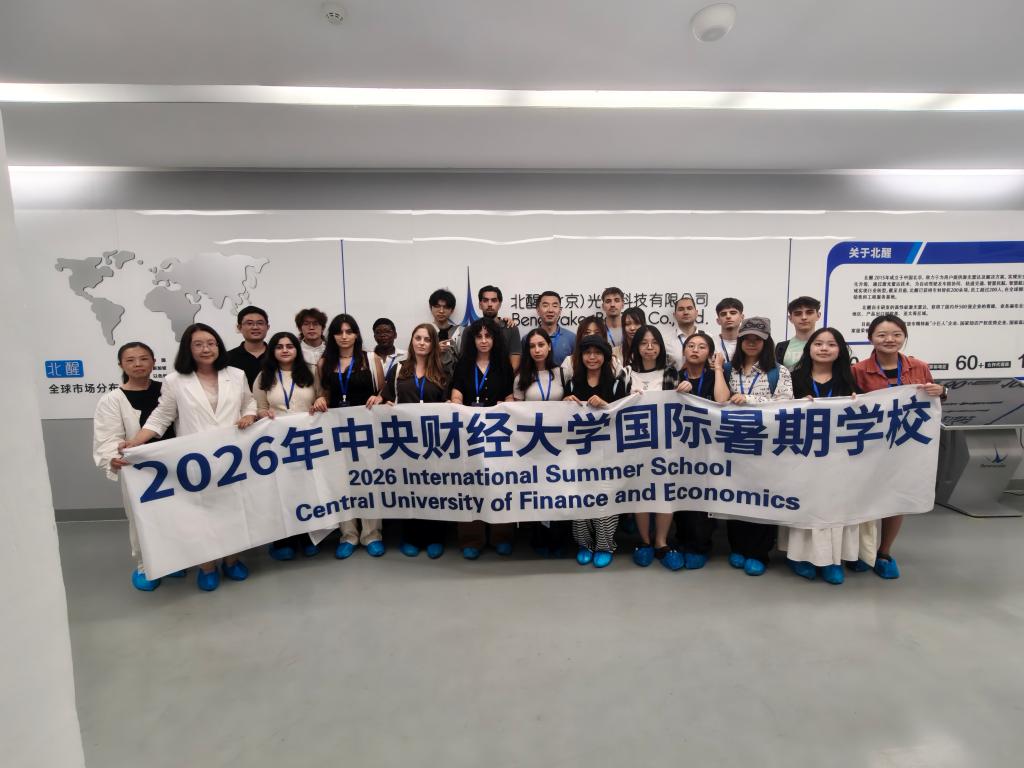
In the practical teaching module, the courses adopted a model combining on-site observation with frontline dialogue. Actively responding to national initiatives on innovative development of the digital economy and the cultivation of entrepreneurship and innovation in the Beijing-Tianjin-Hebei region, professional teachers led Chinese and international students out in multiple groups for field research every afternoon. The students successively visited science and technology enterprises such as Benewake (Beijing) Photon Technology Co., Ltd. and NewLink Group, and conducted industrial visits to the Shunyi Entrepreneurship Incubation Center. They also carried out market research at the community and sub-district levels, conducting field market surveys around entrepreneurial ideas independently conceived by each group and interviewing local residents and industry practitioners face to face to investigate product implementation needs and market fit.
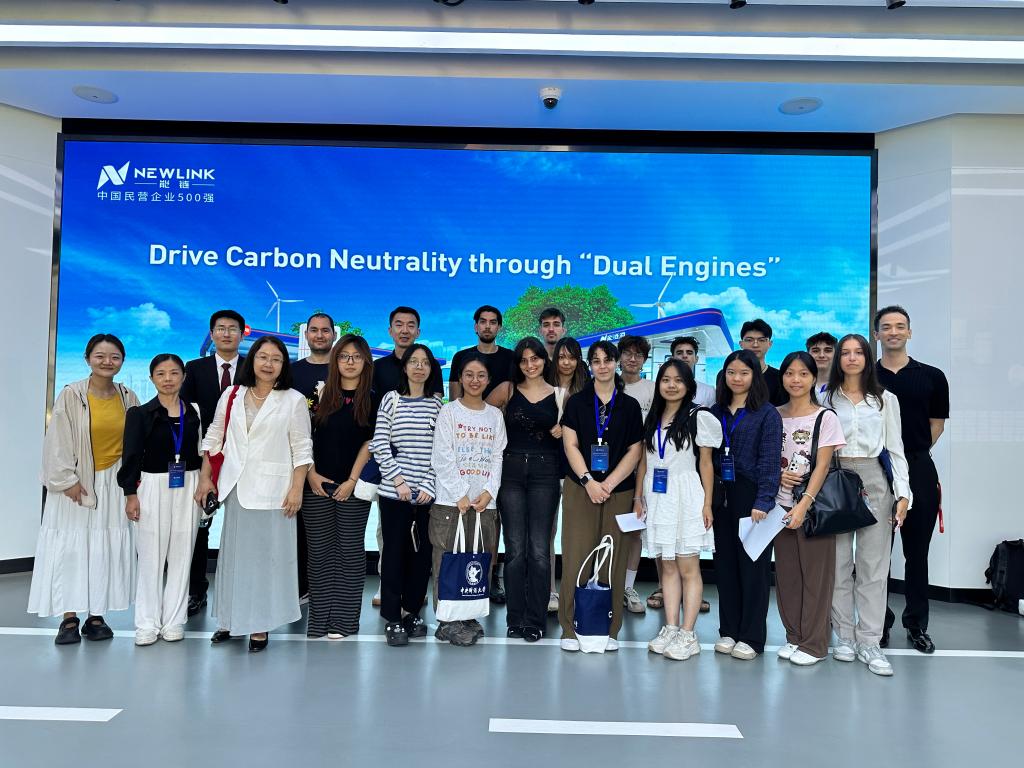
Chinese and international students visited science and technology enterprises on site, gaining an intuitive understanding of the implementation pathways of frontier industrial technologies such as intelligent photonics and energy digitalization, observing the complete supporting system through which entrepreneurship incubation platforms foster youth entrepreneurship, and experiencing up close the innovative strength of Chinese technology enterprises in deep-tech sectors and the vitality of private market entities. Frontline corporate executives and the students engaged in in-depth exchanges on practical issues such as the commercialization of frontier technologies, market positioning of start-up projects, identification of customer needs and the operation and promotion of entrepreneurial projects, fully demonstrating the innovative vision and pragmatic commitment of young Chinese professionals in science and technology innovation.
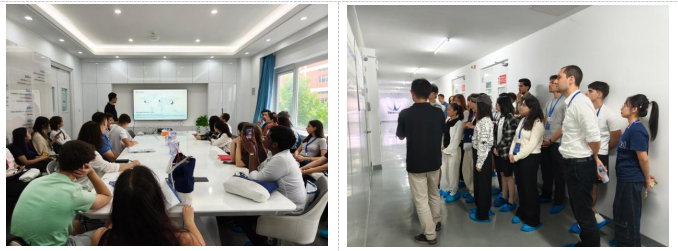
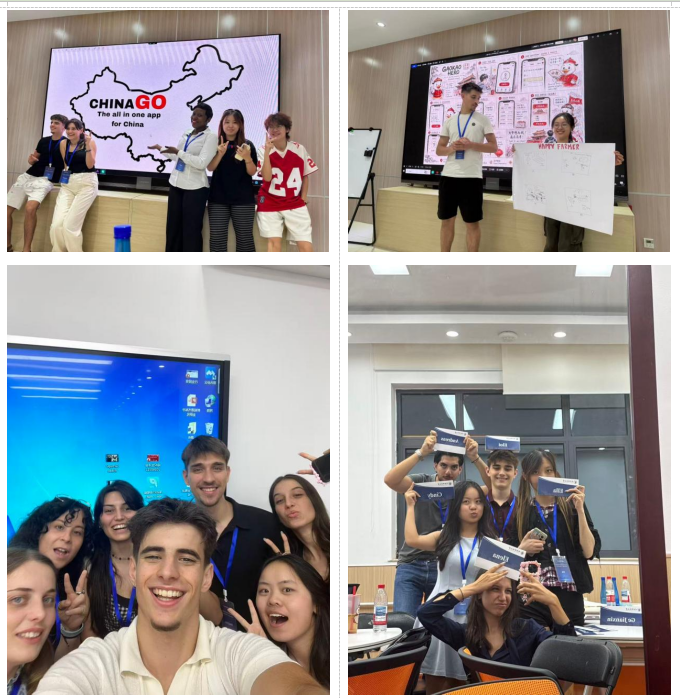
The program broke down national and cultural barriers by forming integrated multinational practical training teams, and, through a series of on-site cultural study activities, helped international students immerse themselves in local life and intuitively appreciate the unique spiritual richness and contemporary appeal of fine traditional Chinese culture. All students carried out full-process collaborative practice around a simulated digital entrepreneurship theme. Chinese and international students gave full play to the differentiated advantages of their respective cultural backgrounds, perspectives and professional knowledge, complementing one another and working collaboratively to jointly refine and improve their entrepreneurial proposals. During the Demo presentation, each team took the stage in turn to present the complete outcomes and implementation plans of their simulated digital entrepreneurship projects. The professors conducted comprehensive evaluations of each group’s performance based on professional standards, analyzed the highlights of and room for improvement in each project, and offered professional development suggestions for students’ future entrepreneurship and innovation practice and international collaborative learning.
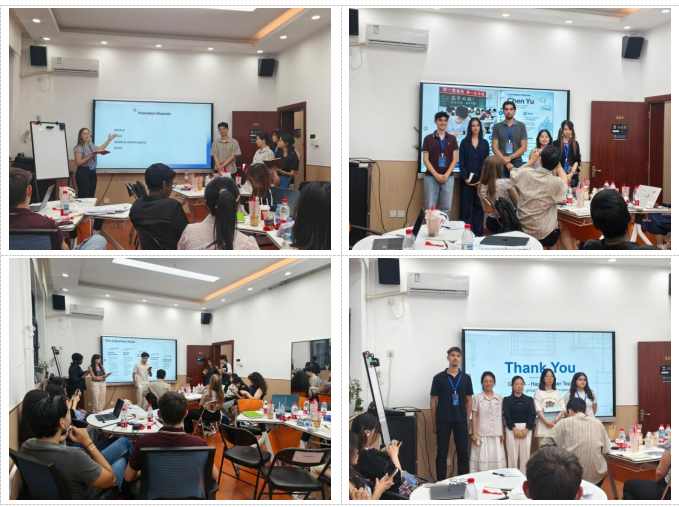
At the closing ceremony, Chinese and international students took the stage in turn to share their learning experiences, discuss the diverse cross-cultural experiences gained during the practical study, and carefully review what they had thought about and gained, as well as their personal growth, throughout the cross-cultural cultural exchange process. Professor Attila Mucsi, Professor Andranik Tumasjan and Professor Ge Jianxin delivered speeches successively, fully affirming the students’ entrepreneurial concepts, which combined creativity with feasibility, and, drawing on industry development and an international perspective, expressed earnest expectations for the students to continue deepening innovative practice and international exchanges in the future.
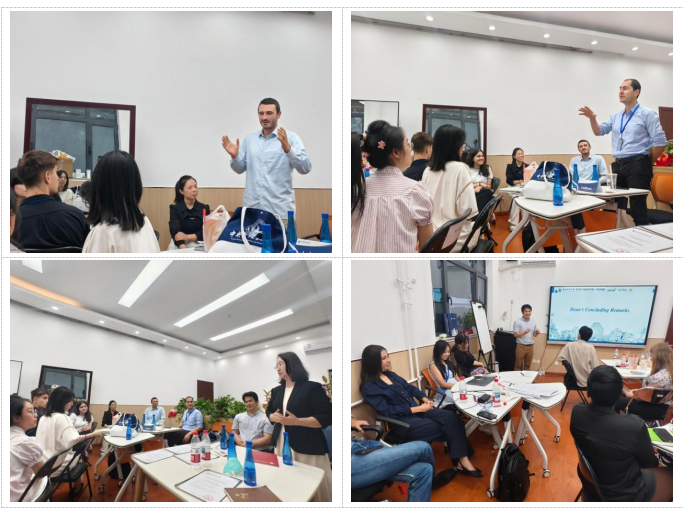
Professor Lin Song, Dean of the CUFE Business School, expressed sincere gratitude to all the teaching faculty and mentoring teams of the International Summer School for their wholehearted dedication and strong support throughout the program, and expressed bright expectations for Chinese and international youth to continue carrying out two-way cultural exchanges and jointly explore entrepreneurship and innovation. At the end of the ceremony, Professor Attila Mucsi, Professor Andranik Tumasjan, Professor Ge Jianxin and Professor Lin Song presented certificates to Chinese and international students and outstanding Team Leaders respectively.
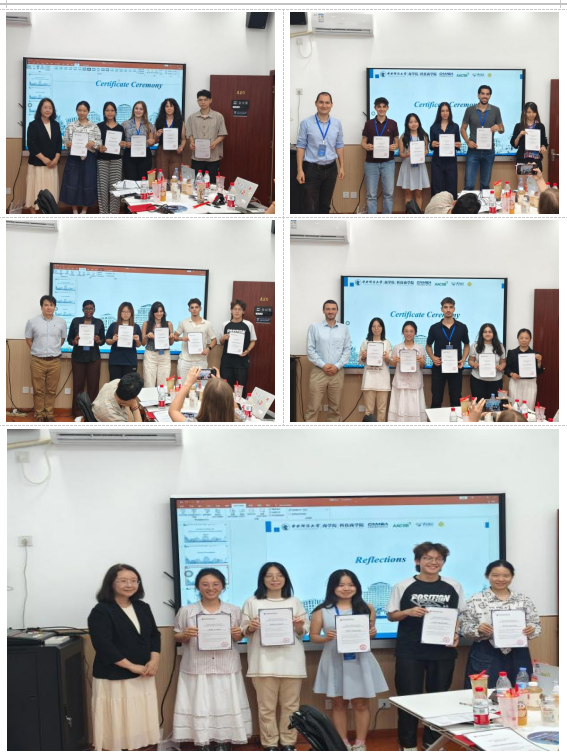
The CUFE International Summer School is a signature brand program through which the university deepens international education and builds two-way exchanges between Chinese and international youth. During the program, Chinese and international students broke down cultural barriers and enhanced mutual understanding through collaborative study and joint practice, forging deep friendships across national borders through teamwork and the collision of ideas. Taking this study experience as a bond, Chinese and international young students will serve as envoys of cultural exchange between China and other countries, continue to carry out diverse interactions and in-depth dialogue based on their professional strengths, and build bridges of communication from a youth perspective, contributing youthful strength to promoting mutual trust and understanding among countries and deepening international friendship and cooperation.
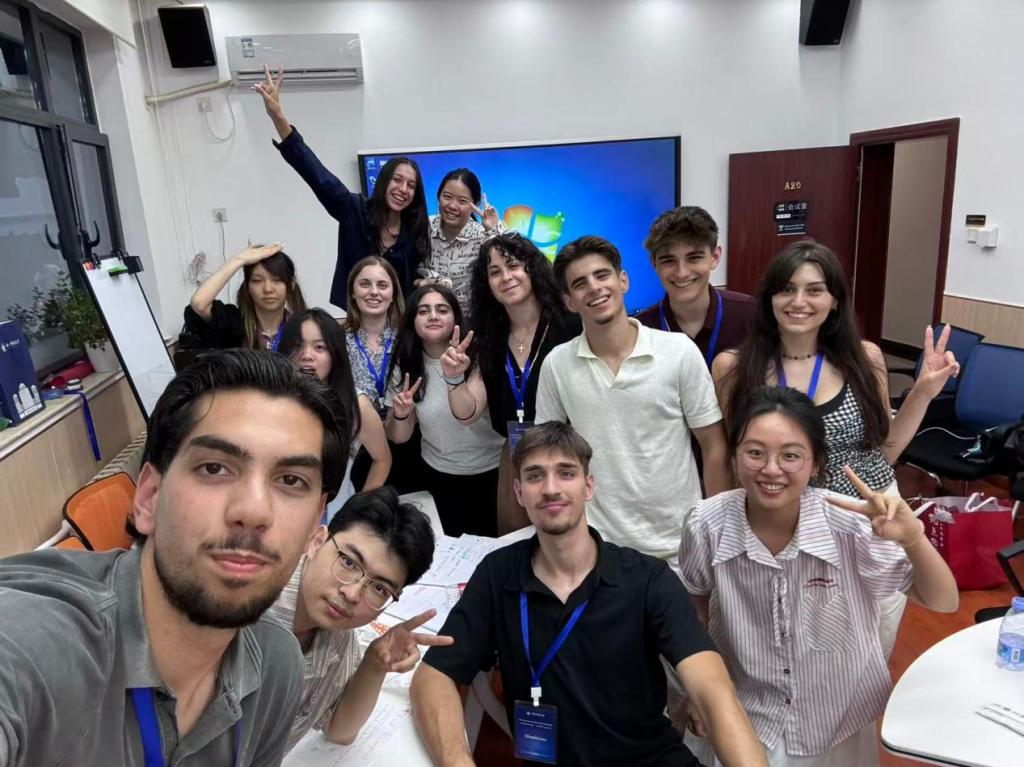
Student Reflections (Excerpts):
Since my experience over these two consecutive years has been so transformative for my personal and professional growth, I wanted to provide a comprehensive testimonial. It highlights how the program helped me evolve from learning strategic frameworks into a cross-cultural leader driving real startup execution.
My two-year journey with CUFE has been a masterclass in high-impact entrepreneurship, corporate innovation, and cross-cultural leadership. In my first year, I focused on mastering heavy strategic frameworks—utilizing tools like the Business Model Canvas, PESTEL, SWOT, Porter’s Five Forces, and the Thomas-Kilmann Conflict Model. More importantly, it was the ultimate training ground for team dynamics, teaching me how to step into a leadership role with a delicate balance: guiding a diverse group forward and driving execution without overshadowing the contributions of my teammates.
Inspired by this impact, I spent this past year presenting and promoting the CUFE program at my university, successfully recruiting and organizing this year's delegation of Greek students. Driven to take my commitment to the next level, I expanded my reach beyond campus borders—delivering a presentation in Heraklion on the comparative architecture of Greece and China, and having the distinct honor of speaking at the Chinese Embassy in Athens on China-European/Greek relations and how to enhance youth cooperation.
Returning for a second time allowed me to turn this leadership theory into powerful reality, achieving all of this within an intensive two-week timeline. A major highlight of this year's study tour was our exceptional corporate visits in Beijing to Benewake and NewLink, providing invaluable real-world business insights. Collaborating within a highly diverse international team (Spain, China, Cyprus, Greece) to develop a specialized, market-validated English-learning app for Gaokao students, I spearheaded our strategy and coordinated our fast-paced operations.
I am incredibly grateful to partner with institutions like CUFE that genuinely empower students to evolve, crush their goals, and unlock their full potential. Moving forward, I am dedicated to further expanding these bilateral ties, actively promoting this incredible program, and continuousy building meaningful cooperation and cultural bridges between Greece and China. CUFE doesn't just teach entrepreneurship; it fundamentally catalyzes your evolution into a global leader.
——Tsotsi Eleni, University of Crete
The two weeks at the CUFE International Summer School witnessed so much vibrant emotion, thirst for knowledge, and a spirit of mutual assistance and co-creation. Because I served as a student assistant, my anticipation for the summer school began almost from the very moment I received the email assignment to contact international friends. To be able to form such a profound connection with the summer school through small things within my capacity has been a great joy and honor for me. At the same time, I am fully aware that my abilities still fall short and that I handled many matters rather immaturely, which has been an even more valuable gain for me. I would like to express my sincere gratitude to the teachers for their painstaking cultivation.
Looking back on the past two weeks, we truly accomplished many things we would never have dared to imagine at the outset. We generated creative ideas within a day of meeting one another; we articulated our creative ideas in English, exchanged views and delivered impromptu progress reports; we completed the task assigned by a professor at 6 p.m. of conducting five face-to-face interviews and reporting the next morning; we decided to abandon a flawed half-finished product and resolutely change direction when the summer school was already halfway through; and we truly faced this project with the truth-seeking, excellence-pursuing attitude of entrepreneurs… And so on. The two weeks passed too quickly, and in retrospect, the boat has already sailed past countless mountains.
As for classroom learning, I believe the greatest gains lay in countless inconspicuous details. Perhaps it was every discussion in which we dug to the bottom of things, perhaps a certain corporate visit, perhaps a professor’s explanation of a particular concept, or even a casual joke made by a classmate. Their distinguishing feature is that these fragmented moments seem unremarkable and bring no sudden epiphany or immediate improvement at the time, yet they imperceptibly shape your thinking. Looking back now, in the very last idea that made me eager to devote myself wholeheartedly, I can see the shadows of countless fragments from these days. I think this is precisely the charm of the summer school’s immersive classroom-plus-practice teaching. There are no rigid textbook constraints and no fixed, immutable conclusions. Every collision of thinking and every clash of views quietly breaks down the limits of one’s own cognition. This silent, nourishing intellectual growth, together with the discussion- and exchange-oriented mode of thinking, is the most precious and enduring treasure I have gained from the summer school.
The International Summer School is a comprehensive, high-intensity and immersive training experience for students. No matter who you are, what major you study or what cultural background you come from, you can find a role here in which to realize your greatest value. Thank you for this journey; I am destined to remember it forever, and I hope we all continue to grow better.
——Chen Feiyu, School of International Trade and Economics, Central University of Finance and Economics
Over the past two weeks, I had the incredible opportunity to study at CUFE. Throughout the program, I gained valuable knowledge about entrepreneurship and developed a deeper understanding of what it takes to turn an idea into a successful venture. Thanks to the guidance and support of the outstanding instructors, I learned concepts and approaches that were completely new to me and was able to expand my ideas into something much more.
Beyond the classroom, I had the chance to make wonderful new friends, experience Chinese culture firsthand, and learn more about what makes China such an amazing country. I would highly recommend this program to any student who is interested in entrepreneurship or simply wants to develop new skills, broaden their perspective, and have a truly rewarding international experience.
——Nida Rana, Montclair State University
The International Summer School at Central University of Finance and Economics, which lasted more than two weeks, was an extremely unforgettable and rewarding experience on my academic journey. On this international platform open to global recruitment, I had the good fortune to gather with outstanding peers from Greece, Cyprus, Spain, the United States, Africa and elsewhere. Under the careful guidance of renowned international professors, we transcended geographical and cultural boundaries and explored the world of entrepreneurship courses together, reaping abundant rewards.
Classroom learning was a process of intellectual collision and reshaping. Students from different cultural backgrounds expressed their own views, and the blending of diverse perspectives made originally abstract entrepreneurial theories vivid and three-dimensional. The professors not only imparted knowledge of cutting-edge business models and strategic planning, but also guided us, through case analysis and group discussions, to learn how to keenly identify market pain points and integrate cross-boundary resources. This immersive cross-cultural learning not only broadened my international perspective, but also gave me a profound appreciation of the limitless possibilities of business innovation in the context of globalization.
Beyond solid theoretical learning, the two corporate field visits carefully arranged by the university benefited me enormously. We stepped out of campus and went deep into the front lines of well-known enterprises, observing mature business operating models and frontier technological applications up close. This practice of on-site observation combined with in-depth dialogue closely linked textbook theory with the real business environment, giving me a more concrete understanding of product development, market promotion and risk management in enterprises.
At the end of the course, our Group One team worked together to complete a business plan for an AI companion toy. From initial concept development and market research to the final refinement of the proposal, we gave full play to our respective cultural and professional strengths and put what we had learned in class into practice. This plan not only honed my teamwork and project implementation capabilities, but also showed me the broad prospects of artificial intelligence in the field of emotional companionship. This summer school was not only an acquisition of knowledge, but also a growth of the mind, injecting strong momentum into my future explorations.
——Gao Yan, Beijing Technology and Business University
Participating in the 2026 International Summer School at the Central University of Finance and Economics (CUFE) was an unforgettable experience, both academically and personally. I am truly grateful to have had the opportunity to study at one of China’s leading universities in economics and business. As an Economics student at the University of Cyprus, this experience has significantly enriched my academic journey and will undoubtedly be a valuable addition to my resume.
One of the highlights of the program was the entrepreneurship course and the “Into the New Era” lectures, which provided valuable insights into China’s economic development, innovation, and business environment. I especially enjoyed the lectures delivered by Professor Adrenik from the University of Mainz. His classes on economics, financial analysis, and the key ratios used in managing and evaluating businesses were exceptionally engaging and practical. The knowledge I gained will certainly be useful in both my academic studies and future career.
The company visits were another outstanding part of the program. Visiting two innovative companies in the Beijing area gave us a unique opportunity to connect classroom knowledge with real-world business practices. In particular, our visit to Newlink, a NASDAQ-listed company, was truly inspiring. Learning about the company’s growth, innovation, and global vision offered valuable insights into modern entrepreneurship and business leadership.
Beyond the academic experience, I am incredibly thankful for the cultural activities organized by the Chinese student liaisons. Their enthusiasm, kindness, and dedication made us feel welcome from the very beginning. Through the cultural tours, I was able to experience Chinese history, traditions, and everyday life in a way that made me feel connected to the country and its people. These moments will remain some of my favorite memories from the program.
Finally, I would like to express my sincere gratitude to all the professors and staff at CUFE for making this wonderful program possible. Their professionalism, passion for teaching, and continuous support—even beyond the duration of the program—made a lasting impression on me. Thank you for creating such an enriching academic and cultural experience. I leave Beijing not only with new knowledge but also with unforgettable memories, meaningful friendships, and a deeper appreciation for China and its vibrant academic community.
——Andreas Georgiou, University of Cyprus
As I write these words, I am already preparing to leave Beijing, yet what lingers in my mind are the hurried figures on the CUFE campus, the rising and falling discussions in the classroom, and the light in everyone’s eyes as we embraced on the closing day. In just two weeks, it was as if a high window had suddenly been pushed open in my otherwise flat university life—the wind was strong, the light was bright, and the world I saw suddenly became different.
To be honest, I was somewhat anxious before going. I come from Guangxi and am used to the humidity and slow pace of the south, and suddenly I was to enter the classroom of one of China’s top business schools, surrounded by classmates from all over the world—Greece, Spain, the United States, Tanzania… To be honest, my first reaction was: “Is my English really good enough?” Because before that, I had basically remained at the level of “being able to understand”—I could read English articles, but my listening always lagged half a beat, and speaking required a great deal of courage.
But the wonderful thing is that the environment really does push you forward. For the first day or two, I still translated Chinese into English in my head before speaking, but later I found there was simply no time, so I just blurted out words and used gestures. And the professors and classmates were extremely tolerant; no one laughed at my accent or grammar. Instead, they would look at me earnestly and wait for me to finish. Gradually, I found that my ears began to “keep up”—I could understand the English of my Greek classmates with their rolling pronunciation, and I could catch the key words in the rapid connected speech of my American classmates. By the second week, I could even actively join group discussions and express my views. Although I still could not speak very fluently, the shift from “I can understand” to “I can also speak” was a huge breakthrough for me. I was no longer a passive recipient, but a genuine participant.
And the courses themselves brought me another kind of shock. The core of this summer school was a simulation of the early-stage entrepreneurial process, and we were required to conceive a project from scratch. At first I thought entrepreneurship was just about having a good idea, but after actually going through it, I realized that every step was far more complicated than I had imagined. We had to conduct market validation—not casually asking friends around us “what do you think of this,” but designing questionnaires, finding real potential users and collecting valid feedback. Then we had to draw the Business Model Canvas, filling in, overturning and refilling modules such as value propositions, customer segments and channels.
But the lesson that struck me most throughout the process came from Professor An Ran from Germany. He did not tell many passionate entrepreneurial stories; instead, he repeatedly emphasized one sentence: “You need data to prove that your solution is feasible.” He taught us that data from market research is far from sufficient if it is merely simple percentages—you also need to calculate return on investment, profit margins, customer acquisition costs, lifetime value… I suddenly realized that a good idea, if it cannot be validated by data, will forever remain merely an “idea.” This way of examining the emotional with the rational is something I had read about in textbooks but had never truly internalized.
And more precious than knowledge and skills were the specific people. We ate many meals together—in the cafeteria, in small restaurants around the campus—sitting around and talking about our countries’ dietary habits and our university lives. What I found most fun was that we began teaching each other our own languages. I taught them Chinese, and they taught me Greek, and I still remember how to say “my friend” and “cheers” in Greek. The connection created by language is truly wonderful—not the standard dialogues in textbooks, but in real-life situations, you help me and I help you, and in the moment you understand each other, the distance suddenly disappears.
These moments made me realize that cross-cultural communication is actually not that complicated—language is only a tool, and sincerity is the universal language.
These two weeks also made me re-examine myself. I once felt that there was a gap between me, coming from an ordinary local institution, and classmates from CUFE and prestigious overseas universities. But now I understand that the gap exists, yet it is not a chasm but a distance that can be closed through effort. I am no longer timid because of my background; instead, I am clearer about what I want. I want to bring back the vigorous energy I saw, heard and felt at CUFE, let it continue to grow in my own soil, and inspire others as well.
Finally, I want to say thank you. Thank you to the CUFE Business School for providing such an open platform, thank you to Guangxi University of Finance and Economics and Professor Luo Sheng for giving me the opportunity to come here, thank you to all the teachers for helping me internalize the knowledge in textbooks, and thank you to every classmate from around the world whose enthusiasm and tolerance turned me, a Guangxi girl who could “only read English,” into someone who “dares to speak English.” This experience will not end when the summer school ends—it has become a part of me, reminding me that the world is vast and that I have already taken the first step to see it. This summer, Beijing was very hot, but my heart was even hotter than the weather. I will always remember it.
——Huang Wenjing, Guangxi University of Finance and Economics
My experience at the 2026 CUFE International Summer School was truly unique. Not only did I have the chance to learn about the international business field but I also got to experience China. The program was well thought out, all the professors were distinguished in their fields and the hospitality was truly heartwarming. The lectures were designed not to be just another “boring class” but to be “experiences”. The goal of this program was not just to learn but to develop the critical thinking of an entrepreneur. If I had to note one thing that stuck with me, it would be the company visits which widened my horizons on the technology business sector. I truly believe and encourage everyone to participate in this program whenever they get the chance because you don’t get the chance every day to immerse your self in both the entrepreneurial world and China.
——Thomas Angelos Prassas, University of Crete
As the several-week International Summer School came to a successful close, I, as the leader of the China Go entrepreneurial group, would like to express, on behalf of all group members, our sincerest gratitude to the Chinese and international professors who guided us meticulously throughout the process.
First of all, I would like to sincerely thank all the Chinese and international professors for their professional and meticulous guidance throughout. The Chinese professors, with deep expertise in domestic cultural tourism and cross-border inbound services, precisely identified the core travel pain points encountered by foreign visitors to China, such as internet restrictions, payment barriers and language communication, and, in line with domestic compliance requirements, clarified the localization logic for our China Go one-stop foreign travel app, offering a large number of actionable suggestions on connecting with domestic cultural tourism resources, cooperating with local service providers and domestic operational details. The overseas professors, on the other hand, brought mature entrepreneurial analytical frameworks from the global travel technology industry, leading us to systematically use the Business Model Canvas and the Value Proposition Canvas to structure our project, to build a diversified revenue system through the Freemium model, and to complete market hypothesis validation, business model stress testing and overseas new media customer acquisition planning step by step, broadening all of our international business thinking. The differentiated and complementary professional perspectives of the Chinese and international professors continuously filled the gaps in the China Go business plan, making the logic of the entire entrepreneurial proposal more complete and its implementation more feasible.
I especially cherish the time spent working side by side with my Chinese and international partners in the group, and I have also gained sincere and profound cross-border friendships from this experience of working together. Our team was composed of students from multiple countries. From the early-stage market research on overseas tourists and the refinement of core product functions to the structuring of the nine modules of the BMC, the calculation of the commission revenue model and the preparation of all-English roadshow materials, every member gave play to their own strengths and divided responsibilities accordingly. I am familiar with the domestic travel environment and the rules of the cultural tourism industry, so I could precisely identify the real travel obstacles for foreigners coming to China, while the international members excelled in overseas user behavior analysis, cross-border communications and payment industry research, and English-language expression of business logic. In the early stage of the project, we often had disagreements due to differences in cultural thinking and industry understanding, and there were also some obstacles in language communication, but no one was eager to argue; instead, we took the initiative to hold offline discussions together in our spare time. I patiently explained to my international partners the actual situation of cashless payment and internet regulation in China, and they also actively shared mature monetization and customer acquisition cases of similar travel apps overseas. When tackling core challenges such as eSIM channel cooperation and platform commission pricing, we compiled industry data and repeatedly worked through the solutions by simulating real user travel scenarios. In our spare time, we shared with one another the customs and travel anecdotes of our respective countries and exchanged views on what tourists from different countries expect from travel services in China. From slightly unfamiliar group members at the beginning to close friends who could confide in and support each other, the tolerance and understanding that transcends national borders enabled us to advance the China Go project efficiently while gaining a pure and precious cross-border friendship, which is also a unique gain from this summer school.
This summer school took us through the entire process of a cross-border travel technology app, from needs identification and business modeling to risk assessment and international roadshow presentation. It not only consolidated our professional capabilities in entrepreneurship and innovation, product operations, market analysis and business calculation, but also systematically trained our comprehensive qualities in cross-cultural communication, international project presentation and multinational team collaboration, enabling me to build a comprehensive and three-dimensional understanding of the digital entrepreneurship track in inbound cultural tourism.
Although the on-site learning at the summer school has ended, we will firmly remember the professional guidance given by all the professors, and, carrying the experience accumulated through teamwork and the inspiration given by our international partners, continue to iterate and optimize the China Go project, continuously improve the platform cooperation ecosystem, revenue system and product functions, and keep exploring more possibilities for digital innovation in inbound cultural tourism. Here, once again, I would like to express my heartfelt gratitude to all the Chinese and international professors who generously shared their knowledge and patiently guided us.
——Zhang Kuntai, CUFE Business School