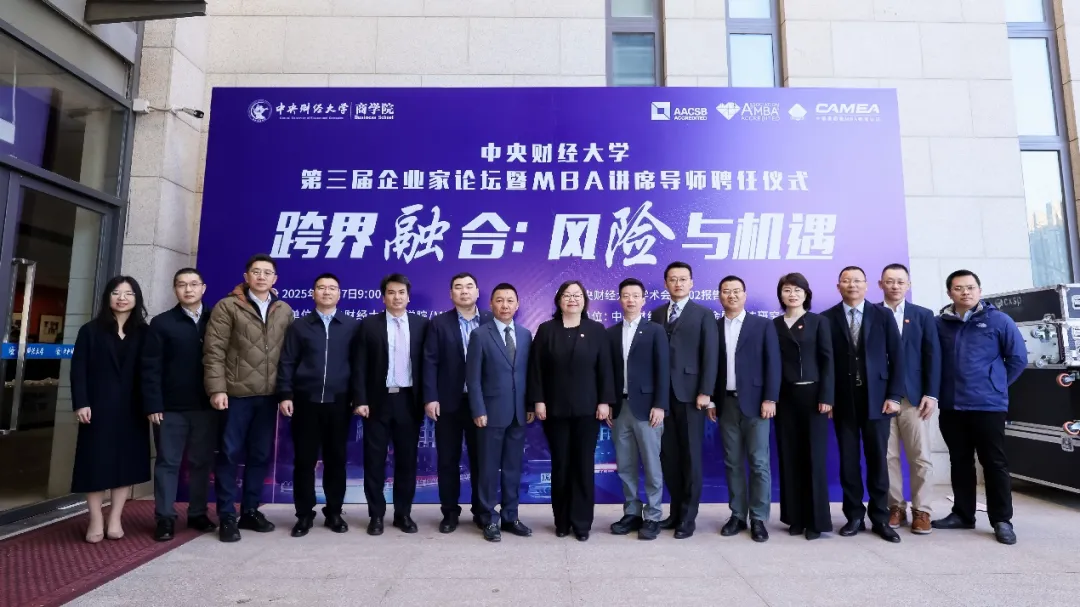
December 7, 2025, the 3rd CUFE Entrepreneur Forum and MBA Chair Mentor Appointment Ceremony was held at Room 202, Academic Hall, Central University of Finance and Economics (CUFE). The event was hosted by CUFE Business School/MBA Education Center, co-organized by CUFE MBA FinTech Research Association, and supported by SPD Bank Beijing Branch, Guangdong Zhenshan Culture Co., Ltd., Beijing Happy Dental Group, and Beijing Xihexiang Cultural Communication Co., Ltd. The forum, themed “Cross-Boundary Integration: Risks and Opportunities”, focused on how enterprises can seize opportunities and respond to risks amid industrial transformation. Nearly 200 participants, including corporate executives, alumni, faculty, and students attended in person, while over 6,000 viewers participated via livestream. Xu Xianmei, Director of Business School Committee, presided over the forum opening.
The 3rd CUFE Entrepreneur Forum
and MBA Chair Mentor Appointment Ceremony
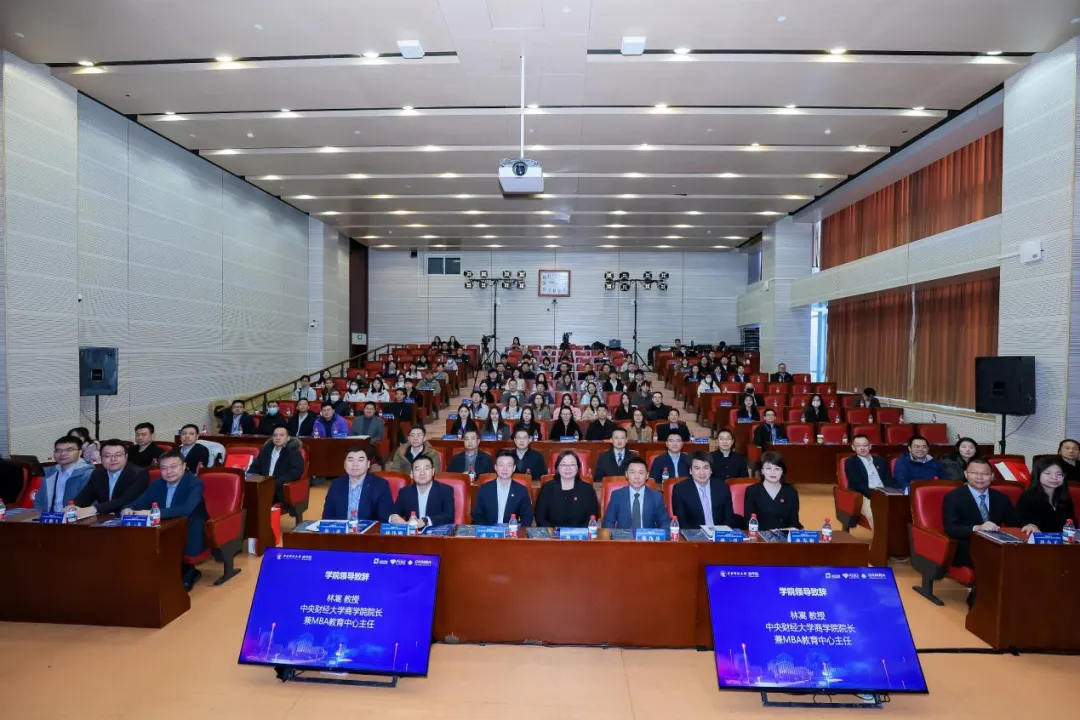
The 3rd CUFE Entrepreneur Forum
In her opening remarks, Yang Ying, Deputy Secretary of CUFE University Party Committee, emphasized that as a Double First-Class university, CUFE has always adhered to the principle of “Born for the Nation, Forging Ahead with the Nation,” with serving national strategies as its mission. This forum is a key initiative to align with the national “AI+” action strategy, implementing a “Education-Technology-Talent” trinity for coordinated development. CUFE has proactively launched dual-degree programs in AI+Insurance/Taxation, added MBA-specialized tracks, developed a dedicated large language model for business and management education, and deepened industry-academia-research innovation mechanisms, aiming to cultivate high-quality, interdisciplinary talent with both professional depth and cross-boundary capabilities. Looking ahead, CUFE will leverage its academic strengths and institutional advantages, keeping talent development at its core, and continue to promote deep integration of government, industry, academia, and research to contribute wisdom and strength toward national strategic needs.
Yang Ying, Deputy Party Secretary, CUFE
Xu Xianmei, Director of Business School Committee, stated that the forum’s theme, “Cross-Boundary Integration: Risks and Opportunities,” not only responds to the contemporary call for the integrated development in the era of “Education-Technology-Talent”, but also reflects CUFE Business School’s educational philosophy of combining industry and business education in practice.
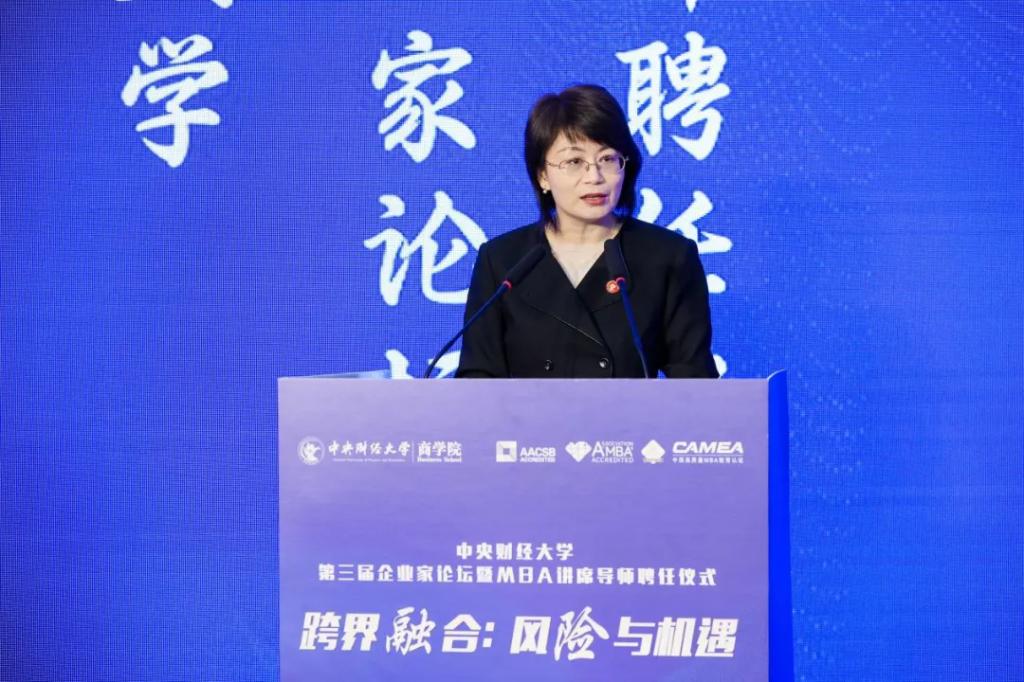
Xu Xianmei, Director of Business School Committee
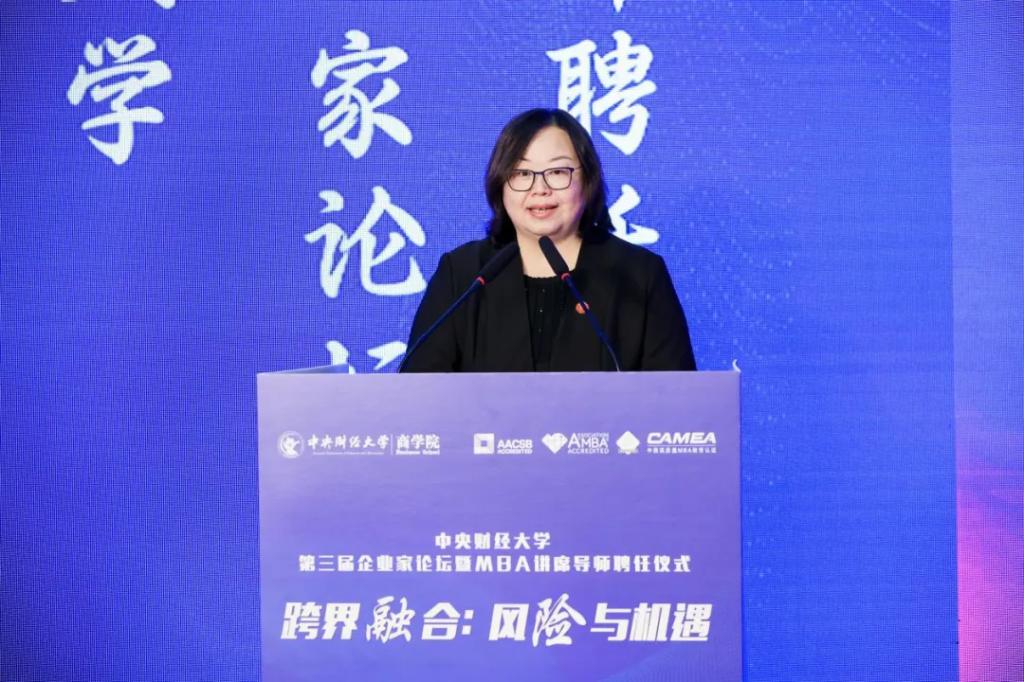
Lin Song, Dean of CUFE Business School and Director of MBA Education Center, noted that cross-boundary integration exemplifies entrepreneurial spirit and represents the direction of business education. He emphasized that business remains the most dynamic force of the society, and society still demands entrepreneurial spirit. Rapid advancement of technology and fast-changing external environment require entrepreneurs to grasp industrial evolution and achieve leapfrog growth, prompting the business school to embrace change. CUFE MBA has introduced tracks such as Tech Entrepreneurship and Investment, Business Computing and Digital Management, and Digital Intelligence Culture Management, with plans to further integrate industry, teaching, and research to serve the core mission of talent development. He expressed hopes that entrepreneurs and alumni will continue supporting CUFE Business School and the MBA program to empower enterprises with business knowledge and create mutual value.
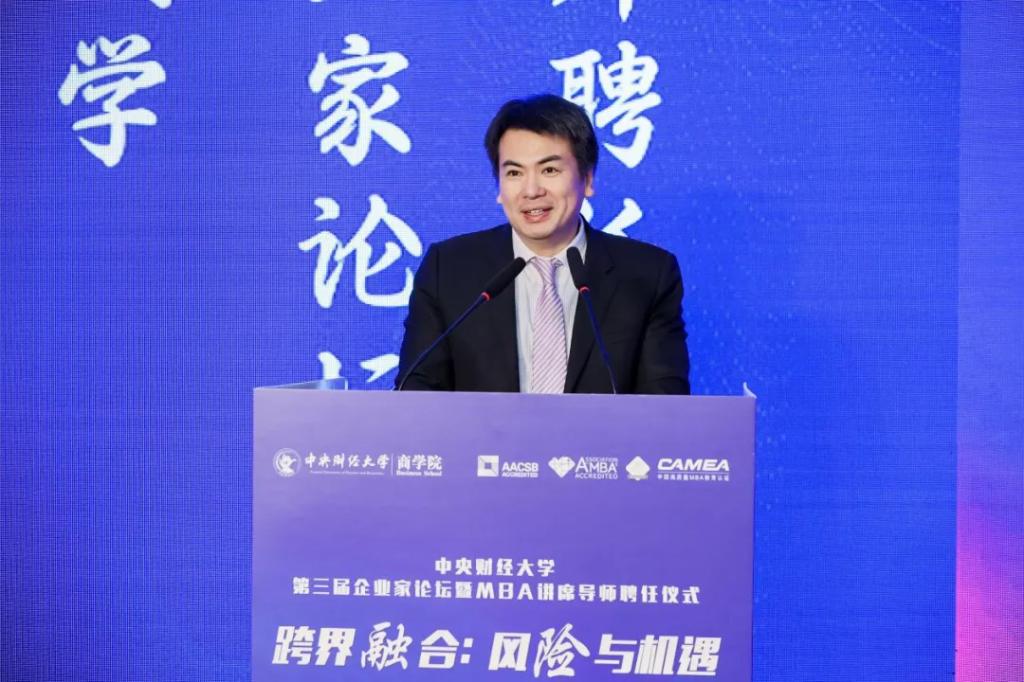
Lin Song, Dean of CUFE Business School and Director of the MBA Education Center
Liu Xiaoyuan, Deputy Director of the MBA Education Center and Vice Dean of CUFE Business School, and Gu Leilei, Vice Dean of CUFE Business School, hosted the keynote speech sessions.
Fan Wei, General Manager of the Fixed Income Financing Division at Shenwan Hongyuan Securities, presented “Bond Market Supporting Technological Innovation”, emphasizing that in the context of global technological development and the competitive dynamics between China and the United States, technological innovation drives national competitiveness and domestic economic transformation. He highlighted challenges faced by tech firms—asset-light, low collateral, long R&D cycles—which misalign with traditional financial risk preferences, leading to challenges in their financing. The innovative initiative of “Tech Board” in the Bond Market broadens issuance channels and establishes a fast-track review process, effectively supporting tech enterprise financing. Fan proposed tiered, precise service strategies to support tech firms throughout their lifecycle.
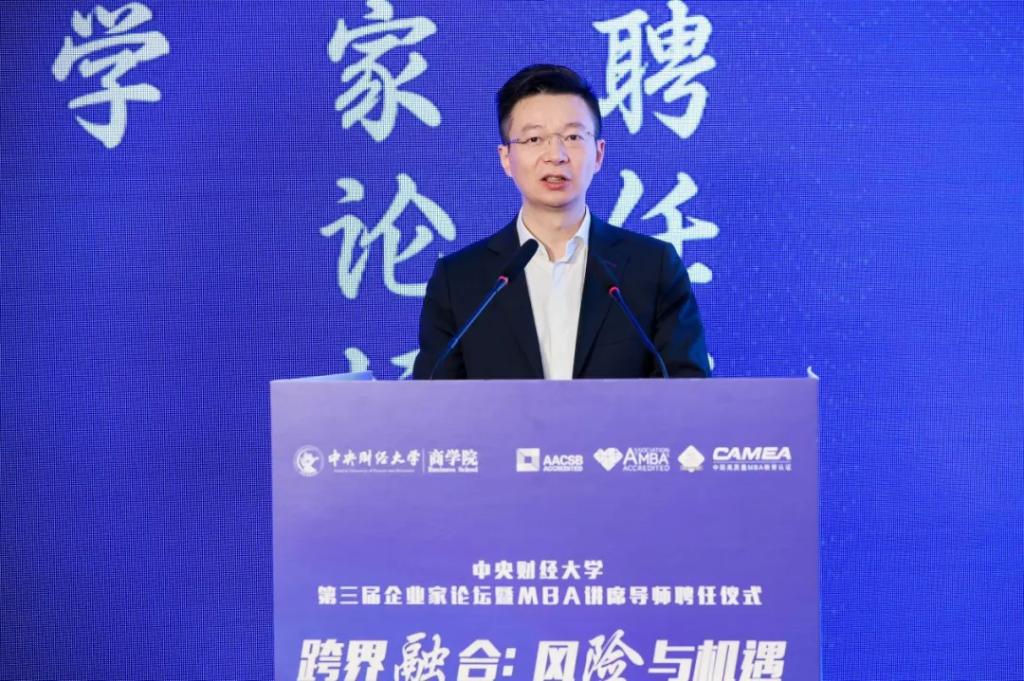
Fan Wei, General Manager, Fixed Income Financing Division, Shenwan Hongyuan Securities
Chen Zuotao, Executive Director of Tianhao Investment Group Co., Ltd., Chairman of Tianhao Energy Co., Ltd., Juchen Semiconductor Co., Ltd., Tianhao New Energy Co., Ltd., and Shandong Guoyao Quantum Radar Technology Co., Ltd., focused on “Enterprise Strategy and Management Innovation of Tianhao Investment Group”, sharing insights from founding multiple enterprises and cross-boundary investments. He pointed out that in-depth research and anticipation of national industrial policies and strategic directions are key for enterprises to mitigate risks and achieve greater results with less effort. Tianhao Group aligns with the national “dual carbon” strategy and tech innovation, forming four industrial segments: Tianhao Energy (natural gas), Tianhao New Energy (biomass power generation), Juchen Semiconductor (chip design), and Guoyao Quantum (quantum LiDAR detection). He emphasized that entrepreneurs need to study national industrial policies and prioritize innovation in corporate strategy and business models, noting that standardized governance and compliant operations are essential for achieving sustainable and stable growth.
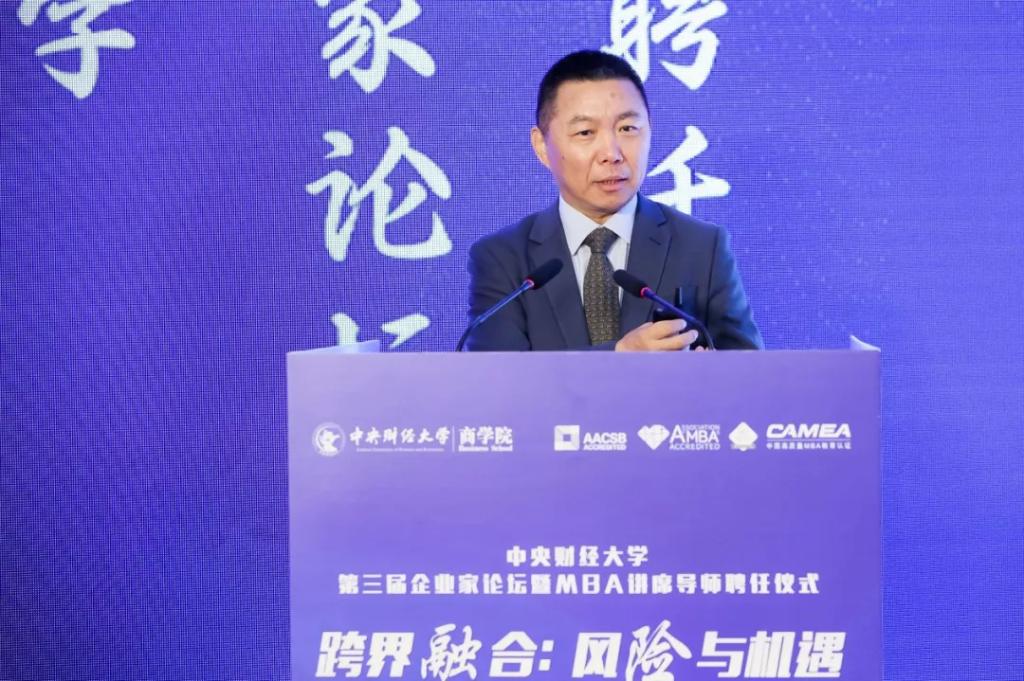
Chen Zuotao, Executive Director, Tianhao Investment Group; Chairman, Tianhao Energy; Chairman, Juchen Semiconductor
Li Xiang, Class of 2011 MBA alumnus, Co-founder and COO of Microcyto Biotechnology (Beijing) Co., Ltd., delivered “Biomanufacturing: The Most Certain Productivity Revolution of Future Industries”, noting that synthetic biology and biomanufacturing, as a key battleground in cutting-edge technology between China and the United States, are now embracing historic opportunities. Advances in gene editing and AI have exceeded critical thresholds in life “design-build” capabilities. Using genetically engineered microbes and “cell factories,” target products can be efficiently and directionally produced from inexpensive raw materials, unlike traditional cultivation or energy-intensive chemical synthesis, achieving a revolutionary leap in production efficiency. Using the novel healthy sweetener allulose as an example, he shared the cutting-edge practices of Microcyto Biotechnology: through a proprietary "one-step fermentation" method, production costs were cut in half, and the company successfully obtained the first administrative approval in this field in China. He stated that in the future, biomanufacturing will significantly reduce costs in high-value-added sectors such as food and health products, and that the synthetic biology industry holds broad prospects.
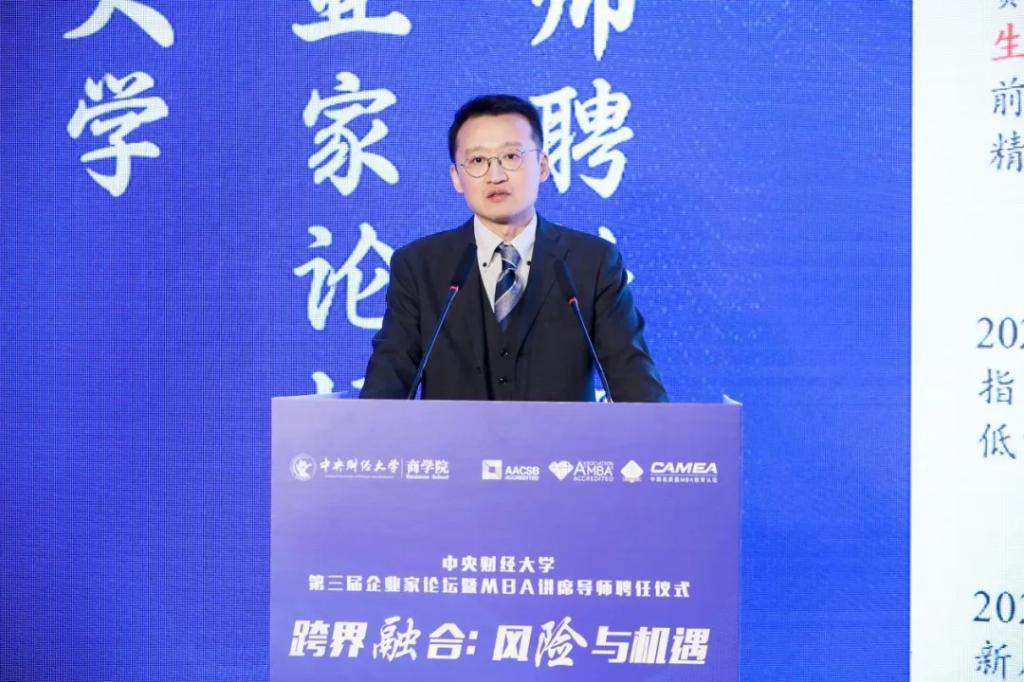
Li Xiang, Co-founder & COO, Microcyto Biotechnology (Beijing) Co., Ltd.
Liu Weigang, CFO and Board Secretary of Digital China Information Service Group Co., Ltd., spoke on “Technology-Driven and Value Reconfiguration”, noting that the development of Digital China Information has always been in sync with the pulse of fintech, and that capturing industry changes and seizing technological breakthroughs are instincts embedded in its DNA. In response to the new trend of digital intelligence, Digital China Information has upgraded its strategic vision to "become a leading partner for financial digital and intelligent transformation," fully embracing AI while setting clear strategic goals: First, to reshape solutions with AI, aiming for AI-related businesses to account for 50% of revenue within three years; second, to transform the operational system with AI, achieving 100% AI coverage in middle and back offices; and third, to enhance delivery efficiency with AI. Liu predicted that future society will form a network collaboration model of "one super intelligent agent and N vertical intelligent agents," and that enterprise value creation will revolve around a "dumbbell" structure consisting of data, model platforms, and application scenarios. AI will eventually become an infrastructure as ubiquitous as electricity, permeating every aspect of people's work and life. Companies must make strategic choices, and "human-machine collaboration" may well become the future organizational form.
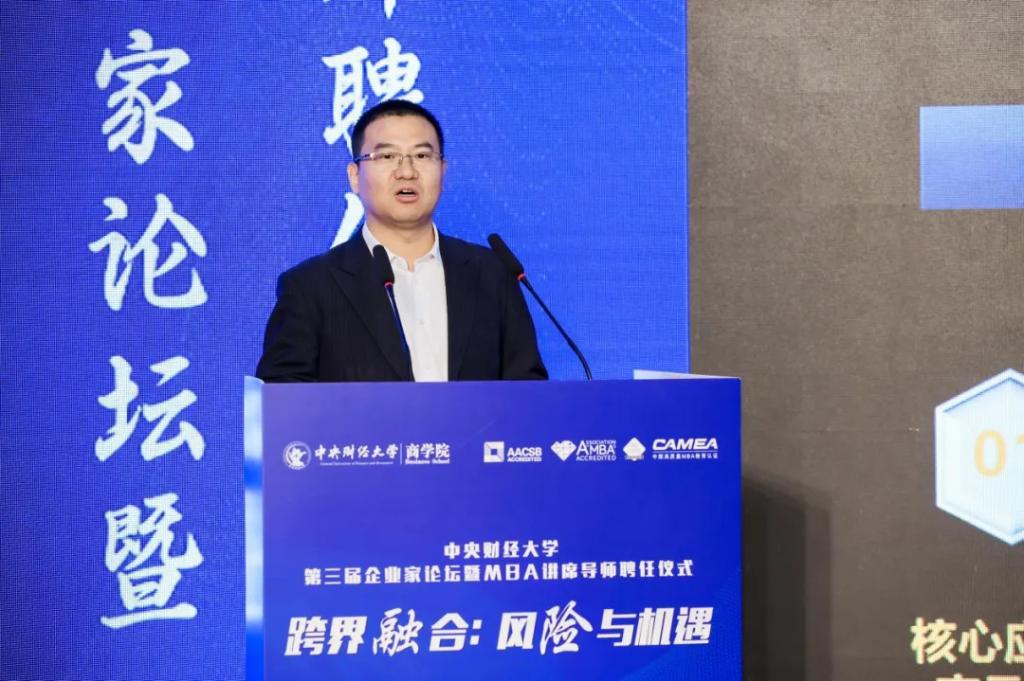
Liu Weigang, CFO & Board Secretary, Digital China Information Service Group Co., Ltd.
At the forum, Liu Xiaoyuan, Professor at CUFE Business School, released the “China’s Listed Manufacturing Enterprises Going Global Report (2015-2024)”, revealing that despite complex geopolitics, Chinese manufacturers expanded overseas over the past decade, with growth in scale, evolving investment entities, and changing strategic motives. The report indicated that Chinese manufacturing enterprises' foreign direct investment continues to grow, with significant changes in the structure of investment entities and a marked increase in the enthusiasm of private enterprises to go global. Geographically, investments now cover 190 countries and regions, with Belt and Road countries emerging as the most dynamic bloc. The role of "connector countries"—such as Singapore, Thailand, Vietnam, Hungary, and Mexico—has become increasingly prominent. The motivation for Chinese manufacturing enterprises to go global has shifted from "efficiency first, security second" to "security first, efficiency second," with companies increasingly relying on geographically diversified layouts to mitigate risks. Meanwhile, approximately 70% of overseas subsidiaries operate as wholly owned entities, reflecting a strong emphasis on strategic autonomy and control. By industry, the automotive sector has emerged as a primary area for greenfield investment. Going-global enterprises are achieving a "value-added leap," with high-tech firms rising strongly and overseas markets becoming a core growth pole. Professor Liu pointed out that Chinese manufacturers expanding abroad must adopt a strategy that balances presence in connector countries with localized operations, while placing great importance on corporate control and strategic autonomy to navigate an increasingly complex global landscape.
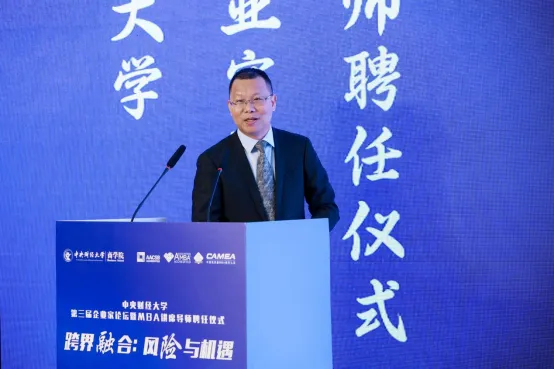
Liu Xiaoyuan, Deputy Director, MBA Education Center and Vice Dean, CUFE Business School
Roundtable Forum
The roundtable forum, hosted by Yao Xiao, Academic Director of the CUFE MBA GEMBA Program and Associate Professor of the Department of Strategies. At the forum, five distinguished guests took part in the discussion: Cao Zhenwu, alumnus of the Class of 2017 MBA, Founder and Chairman of Zhongteng Microgrid (Beijing) Technology Co., Ltd.; Sun Zhigang, alumnus of the Class of 2008 MBA, Chairman, Beijing Guorong Gongfa Investment Management Co., Ltd.; Zhang Zhiwei, alumnus of the Class of 2004 MBA, Executive Editor-in-Chief, China Times; Zou Jianlong, alumnus of the Class of 2005 MBA, Chairman, Beijing Purui Shunxiang Holdings Co., Ltd.; and Wang Xinhan, Vice President and Board Secretary, Shanghai Qimingxin Semiconductor Technology Co., Ltd. focused on the theme of "Opportunities and Challenges in AI-Driven Cross-Border Integration," drew on AI applications in scenarios such as microgrid control, state-owned capital allocation, media transformation, medical device R&D, and chip development, and shared insights into the opportunities and challenges emerging at the intersection of industries.
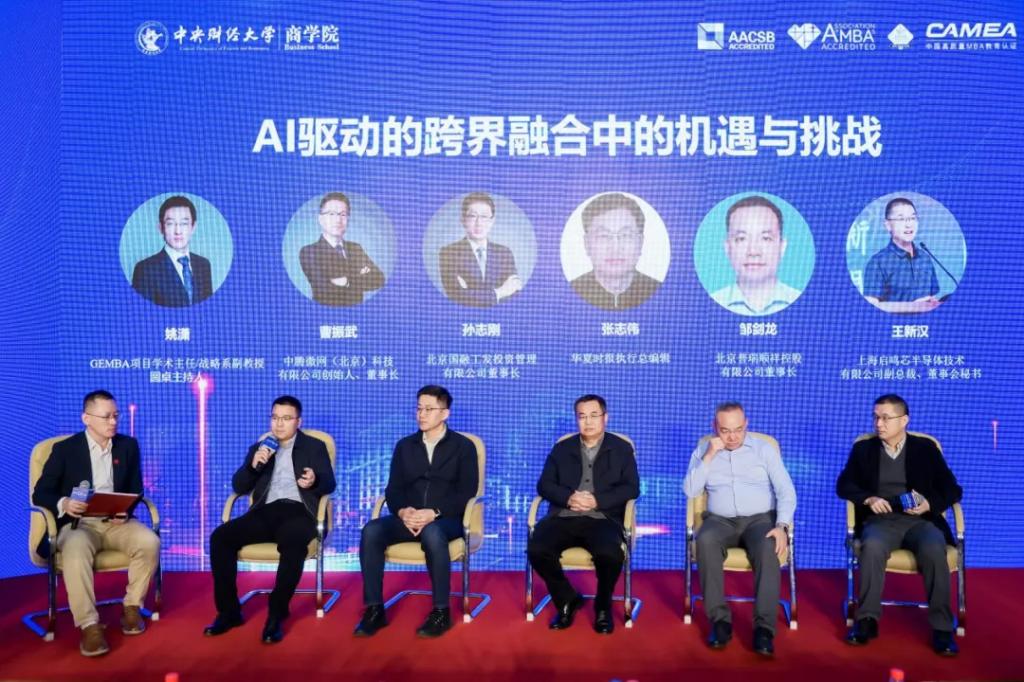
Roundtable Forum
To advance CUFE MBA education, deepen industry-academia integration, enhance the cultivation of students' hands-on capabilities, and strengthen the construction of the practical advisor team, CUFE Business School appointed 18 MBA Chair Mentors to participate deeply in the cultivation of Master of Business Administration (MBA) students.
Yin Tao, Deputy General Manager of Western Securities Co., Ltd., delivered a speech as an MBA Chair Mentor representative. He reflected on the history of collaboration between Western Securities and CUFE Business School, highlighting the fruitful outcomes of the two-year partnership, from the signing of a memorandum of cooperation, to the hosting of summer training camps, executive lectures, and regular campus activities, as well as jointly applied research projects that received key funding. As a newly appointed Chair Mentor, he expressed his commitment to fulfilling his duties with dedication and his willingness to work alongside fellow MBA Chair Mentors to integrate resources and actively participate in the cultivation process of CUFE MBA program, contributing to the development of outstanding talents with global vision and innovative capabilities.
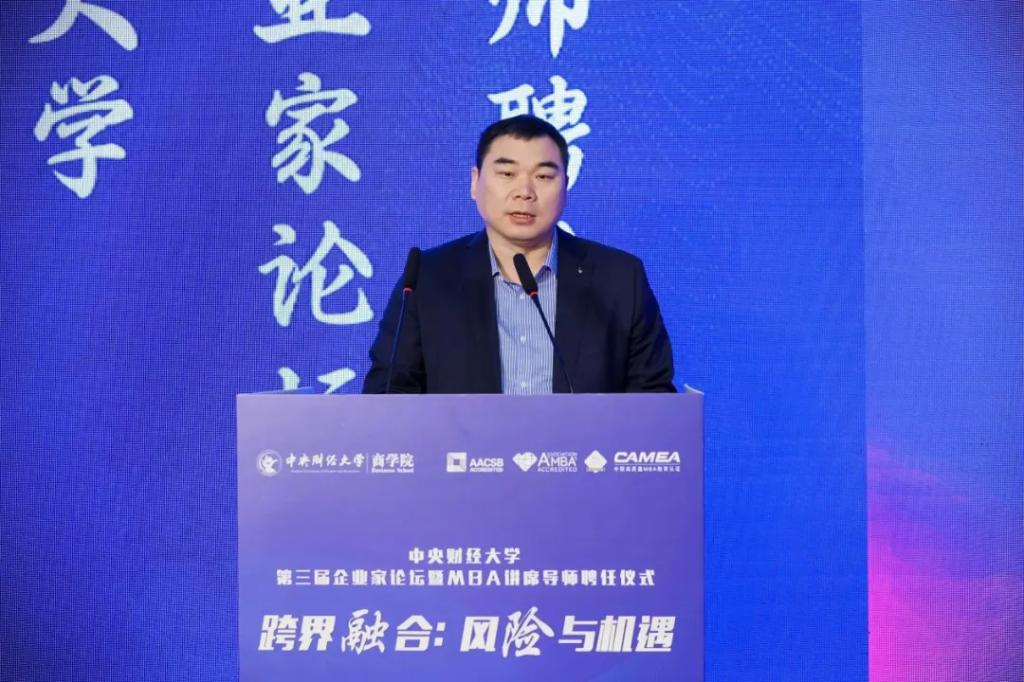
Yin Tao, MBA Chair Mentor; Deputy General Manager, Western Securities Co., Ltd.
About the Entrepreneur Forum
The Entrepreneur Forum is a signature event of CUFE Business School and the MBA Education Center, aiming to unite entrepreneurs and provide a high-quality platform for cutting-edge discussions. Through in-depth dialogue between academia and industry, this forum deepened the integration of industry and education as well as university-enterprise collaboration, providing practical support for the cultivation of "π-shaped" talents in CUFE MBA program. It also offered intellectual backing for enterprises to identify opportunities and manage risks amid transformation, demonstrating CUFE Business School's mission and commitment to serving national strategies and empowering industrial development.